Under the shadow of Russian invasion, researchers scramble to digitize artifacts of Ukrainian Jewish life, providing new insights into the murder of 33,771 Jews in Kyiv in September 1941
By Zev Stub
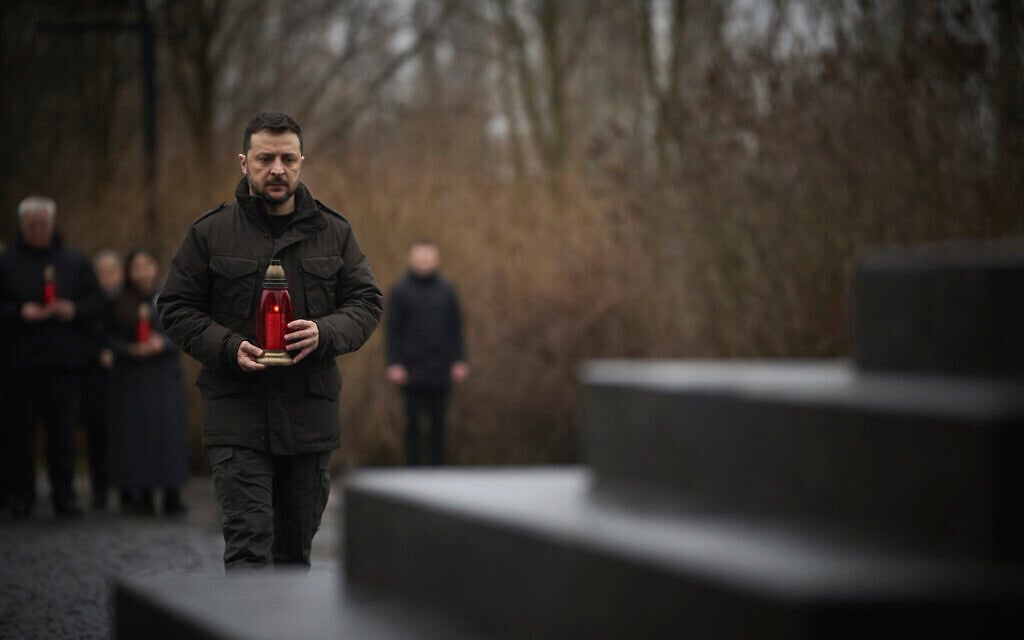
As Holocaust memorial institutions gathered on Monday to mark the 84th anniversary of the Babyn Yar massacre, in which Nazis and their collaborators murdered more than 33,000 Jews in a two-day rampage, the names of more than 1,000 previously unidentified victims were read for the first time thanks to new archival documentation.
Since the Russian invasion in February 2022, Ukraine has offered unprecedented access to government archives as Russian forces target information repositories, Natan Sharansky, chairman of the Babyn Yar Holocaust Memorial Center (BYHMC), told The Times of Israel. This allowed an international team of researchers to piece together fragments of data to uncover these names, he said.
“There are hundreds of years of Jewish history in Ukraine, and more than 20 million documents about Jewish life there,” said Sharansky, the former Russian refusenik and Israeli politician who now also serves as the chairman of both the Institute for the Study of Global Antisemitism and Policy (ISGAP) and the Combat Antisemitism Movement. “Working with Israel’s National Library, we have already digitized more than 7 million pages from multiple locations. This provides information not only about the Holocaust, but about marriages, deaths, legal proceedings, and all aspects of Jewish life.”
Promoted: Jewish Crossroads w/ Batya Ungar-Sargon00:00/01:16
On Monday, BYHMC and the International March of the Living read 1,031 newly discovered names at the massacre site in Kyiv in a ceremony that included the Jewish Kaddish memorial prayer. A parallel event at the National Library in Jerusalem featured a similar reading, as well as a discussion on the challenges of Holocaust remembrance during wartime featuring Sharansky, Yad Vashem chairman Dani Dayan, National Library chairman Sallai Meridor, and Ukrainian Ambassador to Israel Yevgen Korniychuk.
To this day, BYHMC’s database contains 29,671 names of victims as young as nine months old and as old as 102, enriched with details such as ages, addresses, relatives, professions, and circumstances of death.
Get The Times of Israel’s Daily Edition by email and never miss our top stories
By signing up, you agree to the terms
Babyn Yar, a ravine in the Ukrainian capital, is the largest killing field of the Holocaust outside of the Nazi concentration camps, and the site of one of the bloodiest massacres of the war.
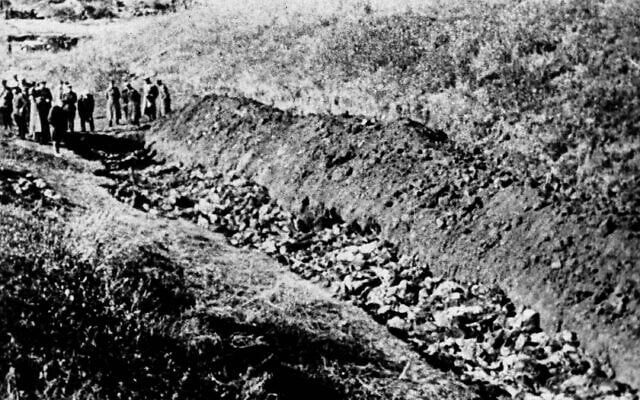
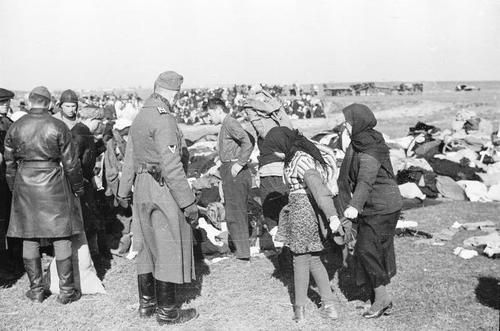
On September 29–30, 1941, on the eve of Yom Kippur, 33,771 Jews were murdered in just two days. During a 36-hour period, Jews of the surrounding area were ordered to march toward the ravine, where they were stripped naked, shot dead, and buried. Many of the victims, who were primarily women, children, and the elderly, were forced to lie face down on top of other bloodied corpses so their Nazi killers wouldn’t have to move them.
Over the next two years, at least 70,000 more people were murdered at the ravine, including Jews, Romanis, Ukrainian nationalists, and Soviet prisoners of war, bringing the death count to more than 100,000 people murdered there by the Germans and their local collaborators.
Advertisement
Killing operations were halted in 1943, when Berlin ordered that all mass execution sites be excavated so the corpses could be destroyed. New technology has recently helped identify the exact location of the atrocity.
“Babyn Yar became the largest mass grave in Europe, and has become a symbol of the ‘Holocaust by Bullets,’” Sharansky said, using a term for the 1.5 million Jews killed by Nazi and Nazi-aligned forces in the occupied Soviet Union and its republics at the time.
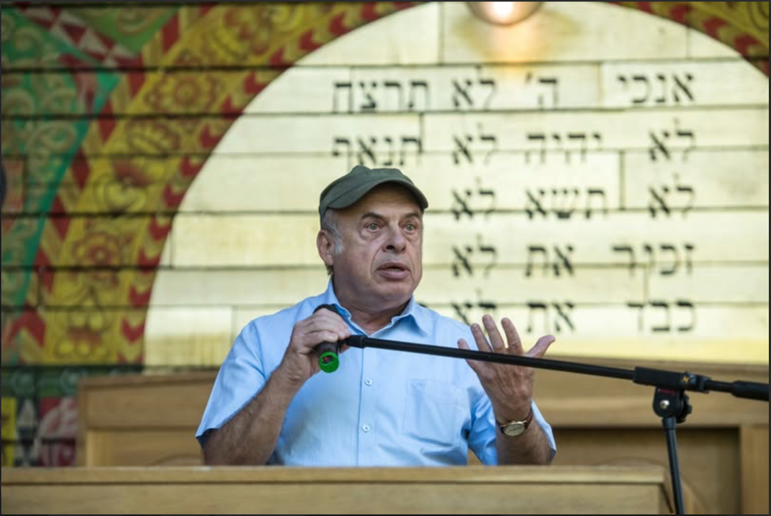
After the war, the Soviet Union made a concentrated effort to hide the memory of Babyn Yar, exhuming bodies and building over it, Sharansky noted.
“They prohibited people from having any memorial ceremonies there so people wouldn’t know the history. That’s why, as a person who was born there and grew up there, when I was approached 10 years ago to help build a memorial center there, it was very personal,” he said.
Currently, the site of the Babyn Yar Holocaust Memorial Center includes a number of monuments to its past, including a unique synagogue designed to open and close like a book for use at special occasions. More than 300,000 people, including international leaders and Ukrainian citizens, have visited the site since the Russia-Ukraine war started in 2022, according to the institution.
Advertisement
Work on an expansive museum that would eclipse Yad Vashem and other international memorials in size began several years ago, but construction work is on hold due to the war.
In the meantime, BYHMC has redoubled its efforts to develop its archives, buttressed by access to government archives. BYHMC says it is working to create the most comprehensive archive of its kind in Eastern Europe, with researchers working in more than a dozen locations, often under fire, to preserve materials for generations.
In addition to 1,031 new names added, more than 2,000 existing records have been updated and corrected since the war began, BYHMC noted.
Among the newly discovered materials are applications to adopt children orphaned after their parents were murdered at Babyn Yar, petitions by citizens seeking legal recognition of relatives’ deaths for inheritance, remarriage, or financial support, and birth certificates from the 1920s and 1930s that helped identify children murdered alongside their parents.
“In some cases, they matched birth certificates located in one location with names written in other towns,” Sharansky explained. “Researchers in Odesa and other locations were limited because of ongoing attacks, but they understand that this may be their last opportunity to save these documents.”
One striking case is a 1946 legal file detailing the plea of Zindel Kravetsky, who sought recognition of the deaths of his wife and three children – 8-year-old Aron, 6-year-old Zoya, and 4-year-old Vova – all murdered at Babyn Yar. Another record documents Rakhil Meirovna Kravets, born in 1863, who fled Korosten to Kyiv at the outbreak of the war, only to be murdered in the killing ravine.
To Sharansky and others, preserving their memories is as much an act of self-defense as a commemoration of the past.
“Memory is a moral weapon against denial, oblivion, and distortion, [and] the war in Ukraine is an ideological war no less than a war over territory,” Sharansky said. “There is a blatant attempt to undermine history and even erase it. Precisely in times of war, the obligation to defend the truth is doubled.”