(An article of the journal Criminologie ;Volume 57, Number 1, Spring 2024, p. 213–240 L’épreuve des profilages et des discriminations;Tous droits réservés © Les Presses de l’Université de Montréal, 2024)
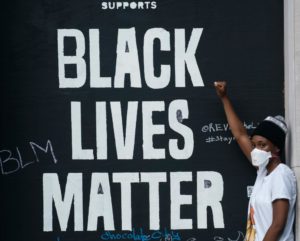
Introduction and Research Context: This article by Massimiliano Mulone, Victor Armony, and Mariam Hassaoui examines how police organizations conceptualize racism within their profession and explain proven disparities in their treatment of racialized groups. The research emerges from a broader Canadian trend where, since approximately 2016, major cities (Ottawa, Toronto, Vancouver, Edmonton, Montreal, Halifax) have commissioned independent researchers to analyze police internal data to document racial profiling. This movement, amplified by Black Lives Matter and the 2020 murder of George Floyd, responds to mounting civil society pressure to address discriminatory law enforcement practices.
The convergence of evidence from these Canadian studies (2016-2021) is unanimous: racialized minorities, particularly Black individuals, face systematic disproportionate targeting. In Montreal, Black citizens are 4.24 times more likely to be stopped than white citizens (rising to 10-15 times in certain neighborhoods). Halifax shows disparities ranging from 4.78 to 6.43 times. Toronto data reveals Black individuals, while comprising only 8.8% of the population, represent 28.8% of use-of-force cases, 36% of police shootings, 61.5% of fatal interactions, and 70% of fatal shootings. Despite this overwhelming evidence, most police organizations continue denying systemic racism exists within their profession.
Theoretical Framework: Agnotology and the Racial Contract
The Concept of Agnotology
The authors employ agnotology – the cultural production of ignorance – a concept originally developed to understand how the tobacco industry systematically discredited scientific evidence linking cigarettes to cancer. Agnotology operates through three mechanisms:
Explicit strategic denial – Deliberate efforts to protect organizational interests
Censure and selective forgetting – Hiding or suppressing information
Voluntary blindness – Subtle, often unconscious maintenance of ignorance to preserve moral identity
Charles Mills’ Epistemology of Ignorance
The article draws crucial connections to philosopher Charles Wade Mills’ theory of the “racial contract” and his concept of an “epistemology of ignorance.” According to Mills, the white Western world operates within a systematic framework of unknowing that:
Denies the racial foundations of modern society – The social contract is fundamentally a racial contract that structures all political, economic, and social relations through racial hierarchy
Requires constant invisibilization – White supremacy survives only through persistent denial, relegating racism to a supposedly resolved past
Produces “racism without race” – Modern discrimination operates without explicit racial language, making it more insidious and difficult to combat
Mills’ framework suggests this ignorance isn’t accidental but represents a functional cognitive system that allows racial hierarchies to persist while appearing not to exist. The police context represents a specific institutional manifestation of this broader social phenomenon.
Methodology
The study employs a mixed-methods approach examining one medium-sized Quebec municipal police force:
Quantitative Component
2,392 stops and interceptions (2016-2019)
9,060 recorded infractions from the same period
Census data for population composition (N=89,025)
Analysis limited to Black-white comparisons due to insufficient data for other groups
Qualitative Component
12 semi-structured interviews with police officers
All participants white (reflecting force composition)
11 men, 1 woman, averaging 16.8 years of service
72-minute average duration
Conducted via videoconference during pandemic
Key Analytical Indicators
IDCI (Indicator of Disparity in Stop Chances): Compares groups’ relative weight in stops versus general population
ISRI (Indicator of Over-stopping Regarding Infractions): Compares distribution in stops versus criminal infractions
Findings: Quantitative Evidence of Disparities
The quantitative analysis reveals consistent racial disparities:
Base IDCI of 3.3: Black individuals are 3.3 times more likely to be stopped than their demographic weight predicts
Adjusted for population growth: Even assuming 10% Black population by 2019, IDCI remains at 2.6
ISRI of 1.61: Black individuals are over-stopped by 61% relative to their participation in recorded crime
Police Rationalizations: Five Alternative Explanations
The interviewed officers anticipated disparities would be found but offered five alternative explanations to racial profiling:
1. Differential Criminality
Claim: Stopped individuals have criminal records; socioeconomic disadvantage leads to higher criminality among racialized groups, not race itself.
Test: Analyzed stops of individuals without criminal records
Result: IDCI = 3.07 for Black individuals without records
Conclusion: Invalid explanation
2. Differential Flow of Transient Population
Claim: Criminals from neighboring cities (Montreal, Laval), particularly racialized gang members, come to commit crimes.
Test: Excluded all non-residents
Result: IDCI = 3.11 for Black residents only
Conclusion: Invalid explanation
3. Crime-Initiated Production
Claim: Stops reveal crimes (“initiated crime”), justifying disparities through crime detection.
Test: Analyzed only stops producing no infractions
Result: IDCI = 3.14 for stops finding no crime
Conclusion: Invalid explanation
4. Criminalized Locations
Claim: Black individuals are stopped near specific “places of interest” (certain bars, motels) known for criminal activity.
Test: Excluded stops near identified locations
Result: IDCI remains at 3.0
Conclusion: Invalid explanation
5. Bias in Citizen Calls
Claim: Citizens calling police have racial prejudices, creating disparities beyond police control.
Test: Excluded all stops following citizen calls
Result: IDCI = 3.17 for police-initiated stops
Conclusion: Invalid explanation
The Production of Sincere Ignorance
How Police Define Racism
The study reveals officers employ extremely narrow definitions requiring:
Explicit intentionality – Conscious decision to target based on race
Racist values – Personal hatred or belief in racial superiority
Example: Officers describe a racist as “someone who wakes up saying they’ll arrest Black people because they don’t like Black people.”
Misunderstanding Systemic Racism
Officers systematically misunderstand “systemic racism”:
Confuse “systemic” with “systematic” (meaning all officers are racist)
Believe it would require deliberate conspiracy by leadership
Reject the concept since “not all officers are racist”
Cannot conceive of racism without individual malicious intent
Reinforcement Through Personal Experience
Every interviewed officer reported being “falsely” accused of racism (e.g., during traffic stops for clear violations), reinforcing their belief that racism allegations are generally unfounded. This personal experience validates their worldview that accusations are either malicious or ignorant.
The Agnotological Process
Sincere Belief Systems
The research demonstrates officers’ denials are sincere, not strategic:
Officers become visibly emotional when discussing allegations
They genuinely believe their alternative explanations
They feel personally attacked by “false” accusations
They know their colleagues well and “know” they’re not racist
The Art of Self-Convincing
Following Boudon’s theory, officers have developed “good reasons” for false beliefs – intellectual constructions appearing true but resting on false reasoning. Their rationalizations are:
Credible-sounding and partially true
Mutually reinforcing within police culture
Sufficient to maintain cognitive consistency
Functional Ignorance
This ignorance serves psychological and social functions:
Preserves moral identity – Officers can see themselves as good people
Maintains professional dignity – The profession remains noble
Protects against cognitive dissonance – No need to reconcile behavior with values
Enables continuation of practices – No change needed if no problem exists
Mills’ Racial Contract in Police Practice
The study illustrates how police agnotology exemplifies Mills’ broader theory:
Structural Invisibility
Racial hierarchies are embedded in police practices but systematically obscured
Statistics reveal patterns officers cannot see or acknowledge
Alternative explanations maintain the invisibility of racial dynamics
Racism Without Race
The modern form involves:
No explicit racial language or policies
Discrimination through apparently neutral practices
Outcomes that appear coincidental rather than systemic
Impossibility of identifying specific racist acts or actors
Epistemological Barriers
Within officers’ cognitive framework:
Racial profiling is literally unthinkable
Evidence is reinterpreted through non-racial lenses
Statistical disparities must have non-racial explanations
Reform addresses non-existent problems
Implications for Reform
Why Reform Fails
The sincere nature of police denial creates fundamental barriers:
Conceptual incompatibility – Evidence cannot penetrate incompatible frameworks
Polarization – Accusations are seen as attacks on good people
Justified resistance – Why change if there’s no problem?
Reinforcing cycles – Each “false” accusation strengthens denial
The Deep Structure of Resistance
Police agnotology represents not individual or organizational failure but successful operation of a broader epistemological system. This system:
Produces ignorance as actively as it produces knowledge
Maintains racial hierarchies while denying their existence
Operates through sincere belief rather than cynical manipulation
Reflects and enforces society’s broader racial contract
Study Limitations and Future Directions
Acknowledged Limitations
Small interview sample (12 officers)
Single police force studied
All participants white (though reflecting force composition)
Cannot determine how racialized officers might explain disparities
Exploratory nature requiring further validation
Need for Further Research
Systematic analysis of agnotological practices across police organizations
Perspectives of racialized officers
Strategies for disrupting epistemological frameworks
Methods for making racial realities visible within police culture
Conclusion: Understanding the Architecture of Denial
This research reveals how police resistance to acknowledging racial profiling operates through a sophisticated system of knowledge production and ignorance maintenance. The officers’ alternative explanations, while empirically invalid, are sincerely believed and culturally reinforced. This isn’t simply organizational defensiveness or individual prejudice, but part of what Mills calls the “cognitive and moral economy” maintaining racial hierarchies while denying their existence.
The study’s key contribution is demonstrating that police agnotology represents a specific institutional manifestation of society’s broader epistemology of ignorance. Officers aren’t lying about racism; within their conceptual framework, it genuinely doesn’t exist. Their narrow definitions, alternative explanations, and emotional responses all serve to maintain a worldview where they can be good people doing good work while producing racially disparate outcomes.
Understanding these mechanisms is essential for effective reform. The challenge isn’t simply presenting evidence or changing policies, but disrupting entire frameworks of knowledge and ignorance. As long as police operate within an epistemological system that makes racial profiling unthinkable, reforms will be seen as solutions to non-existent problems, ensuring continued resistance and the perpetuation of discriminatory practices. The path forward requires not just confronting racist outcomes, but dismantling the very systems of thought that allow those outcomes to persist while remaining invisible to those who produce them.
Source: https://www.linkedin.com/pulse/comprehensive-summary-police-racism-agnotology-peace-alain-pc4ue/?trackingId=UHA0aJRPRSKuoXbq1Tzwiw%3D%3D