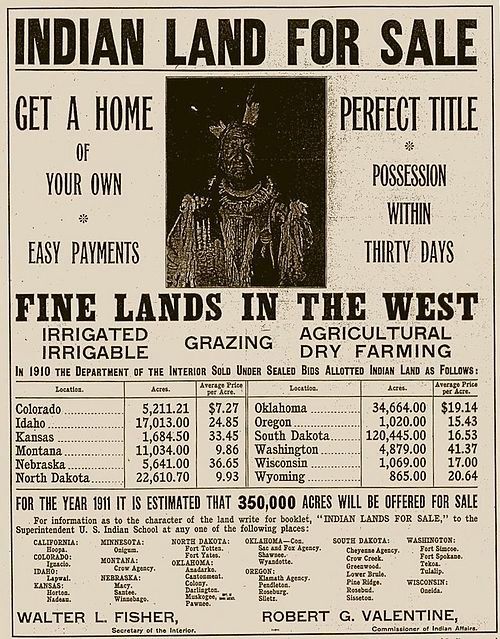
In 1887, Congress passed the Dawes Act, a law that claimed to “help” Native people by turning reservation land into private property. In reality, it broke up communal land, redefined who counted as “Indian,” and opened tens of millions of acres to non‑Native buyers.
Instead of tribes holding land together, the government carved reservations into individual allotments (often 160 acres per “head of household”), held them in federal trust, and then declared any “surplus” land open for white settlement and corporations. Within a few decades, Native nations lost roughly two‑thirds of the land they had held in 1887, and about 90,000 Native people were left landless.
To make this work, officials had to decide who was “Indian enough” to receive land. They leaned on invented blood‑quantum rules, labeling some people “full‑blood,” some “mixed‑blood,” and pushing others completely out of legal Native status. Those classifications still shape tribal rolls, identity debates, and eligibility for federal programs today.
The Dawes Act also attacked sovereignty and social structure. It weakened tribal governments, pushed Christian, nuclear‑family gender roles, and criminalized many cultural practices, all in the name of turning Native people into small farmers and “individual citizens.” Later laws like the Curtis Act extended this system to the Five Civilized Tribes and abolished their courts and governments, paving the way for Oklahoma statehood.
By the 1930s, even federal officials admitted the experiment was a disaster. The Indian Reorganization Act of 1934 finally ended allotment and allowed tribes to rebuild governments, but much of the land and power was already gone. The legacy lives on in fractionated heirship, messy land titles, and ongoing legal fights over trust lands and resource revenues.
The Dawes Act is a case study in how “reform” language can mask dispossession. When a policy breaks up collective ownership, imposes outside definitions of identity, and promises efficiency, the real question to ask is: who gains control, and who is made easier to dispossess?