Building a castle on the moon
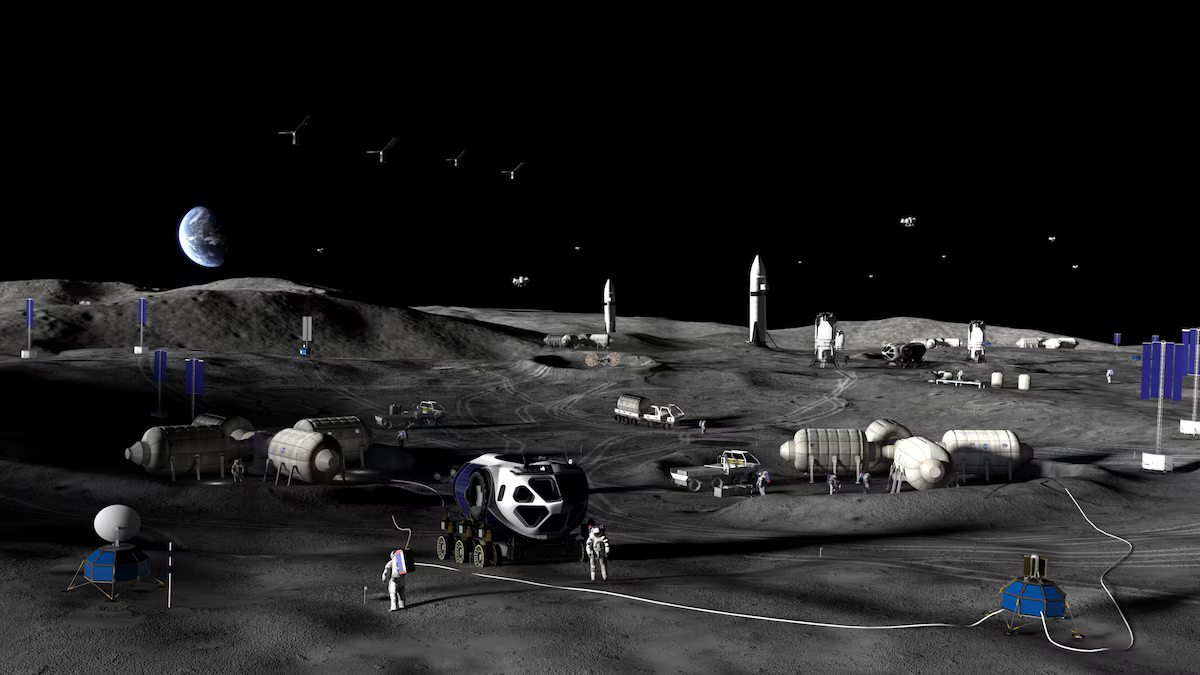
Establishing the very first lunar bastion will occur in a few distinct phases.
Step one, starting with the Artemis V mission, will be gradual experimentation: using mostly uncrewed missions to test out basic technological elements—from power generation to communications relays—to make sure base building can be done effectively and safely. During this phase, the number of launches to the moon will begin to rise. Then, with the help of regular robotic and astronaut visitations, the foundations of the base will be set down during the second phase. At this stage, NASA describes it as “semi-habitable infrastructure,” although it’s not yet clear what this means, precisely. (Early ideas include inflatable shelters, or covering a habitat with lunar soil to help insulate astronauts from radiation.)
“We will visit again. We will construct science outposts. We will drive rovers. We will do radio astronomy. We will found companies. We will bolster industry. We will inspire but ultimately, we will always choose Earth.”
Christina Koch, Artemis II mission specialist
Finally, there’s the third phase, when frequent, heavy cargo deliveries and significant contributions from NASA’s partner space agencies will turn a small, periodically homed fortress into a permanent base, one that is always stationed by a crew, like the International Space Station is today. The idea is that astronauts will spend “a few days to a couple of weeks on the surface, and then build up to something longer—maybe a month, maybe a couple of months,” says Glaze.
The original base will primarily serve as a scientific research outpost, one that can be added to in a modular manner—plugging in new sections as needed, like lunar Lego. Here on Earth, researchers are already hard at work perfecting a method to transform lunar regolith into more earthlike soil, capable of growing specially designed crops. If they succeed, a lunar greenhouse could become a reality. Another key piece of early architecture will be a landing pad, which must be built far enough from the main base to stop corrosive rocks and dust from smashing into it each time a spacecraft touches down.
Driving around the moon
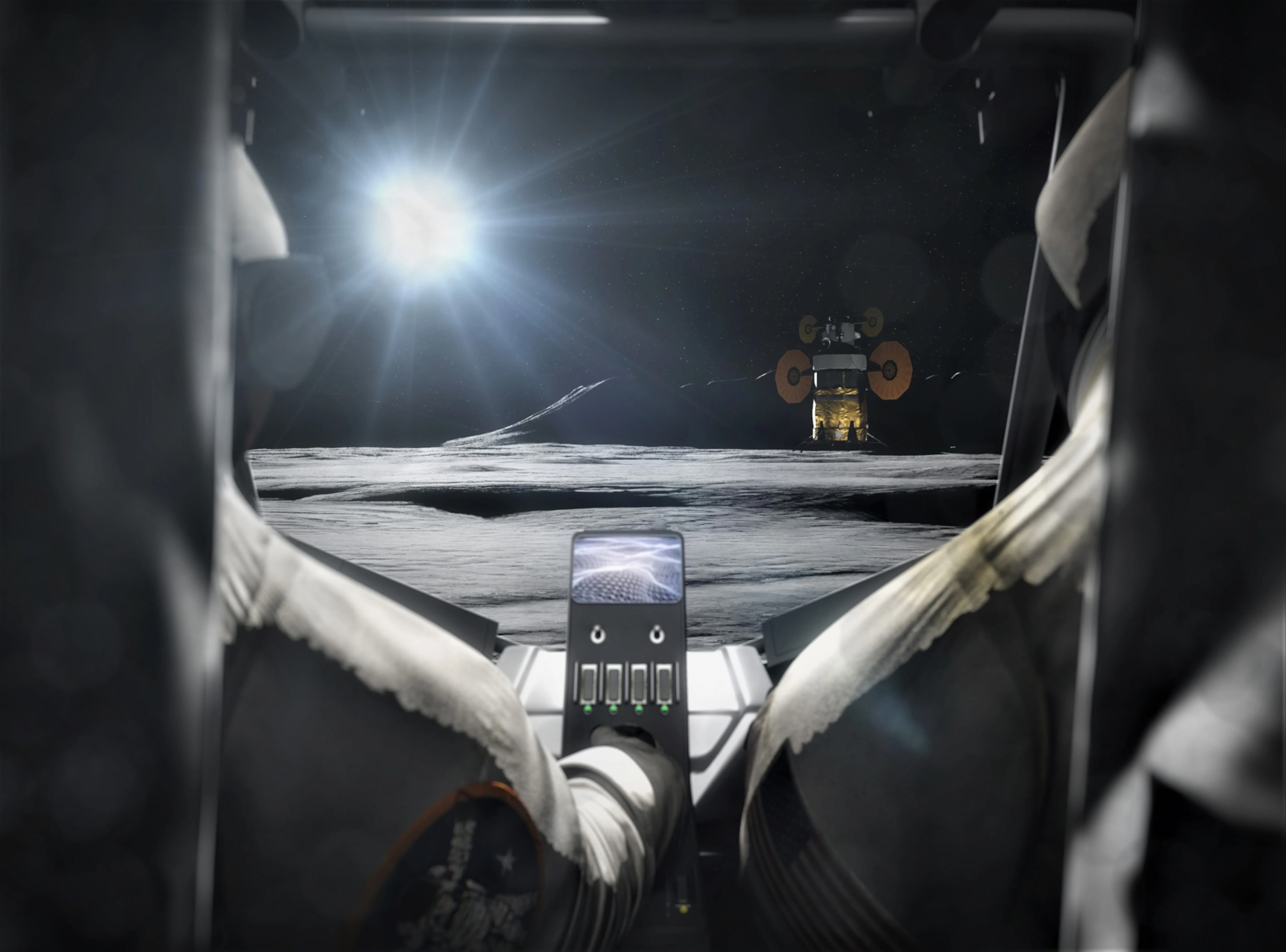
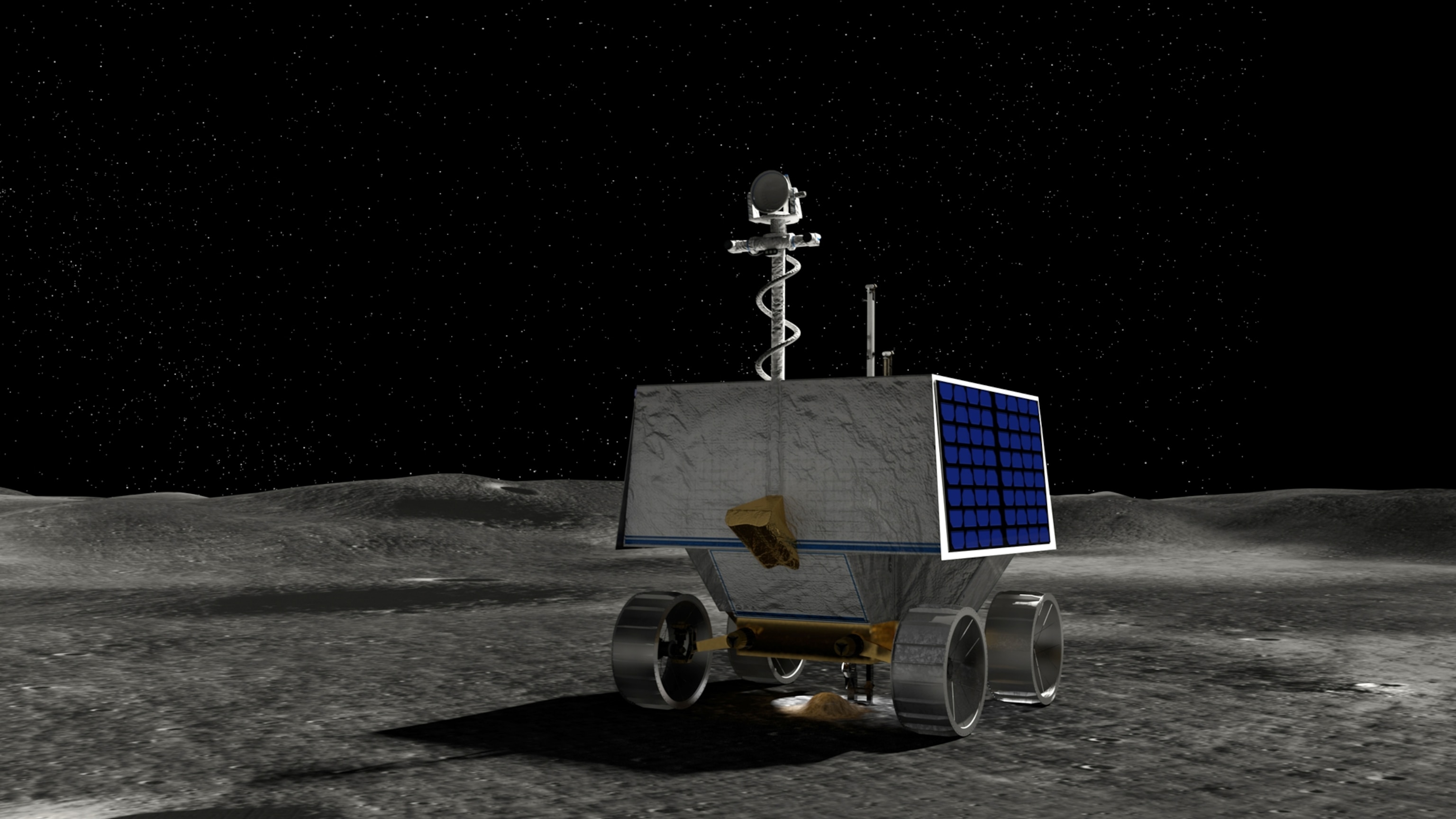
But don’t picture all lunar development as looking like a city, with a dense central hub and expanding outwards from there. “We’re going to establish hubs remotely,” says Crain: small, far-flung scientific outposts studying water-rich deposits within remote craters, for example, or power plants installed a safe distance from the crew.
Space Age prospectors
If you’re on the lunar nearside—the side that always faces Earth—solar power can provide a decent amount of energy needed to fuel simple scientific investigations. But a moon base and its disparate collection of hubs and beacons—augmented by dozens of LTVs zipping about—won’t work on solar power alone. This is especially true at the lunar south pole, where nights can last for 14 agonizingly frigid Earth-days.
Experts agree that the only solution to this is to use nuclear fission power. “Nuclear clearly solves the long lunar night problem, and so that’s the big draw,” says Metzger. A tiny mass of nuclear fuel could power a small lunar base for a couple of decades.
To start, last year, NASA said that it was aiming to deploy a 100-kilowatt nuclear reactor—something 10,000 times less powerful than a typical nuclear power plant, which could fit into a small car—to the lunar surface.
Designing a nuclear reactor that could work on the moon is a novel engineering challenge. The U.S. has only deployed one nuclear reactor to space before—an Earth-orbiting satellite named SNAP-10A—way back in 1965, which ran for 43 days before it stopped working. But just prior to Artemis II’s launch, Isaacman also announced that the agency is building an experimental nuclear reactor-powered spacecraft, one that will be launched from the Earth towards Mars by the end of 2028. Whether the experimental spacecraft works or malfunctions, it will provide a wealth of information to aid development of a lunar power plant. (Launching a nuclear reactor into space, although not without its risks, is also not as dangerous as it sounds: the nuclear fuel itself isn’t dangerously radioactive, but the waste produced during nuclear fission is—which is why the reactor won’t be turned on until it’s left Earth.)
For the foreseeable future, “small-scale microreactors ready for operation on the moon are not so far-fetched,” says Katy Huff, an associate professor in the Department of Nuclear, Plasma, and Radiological Engineering at the University of Illinois at Urbana-Champaign. But eventually, somewhat larger nuclear power plants would be in demand—and not just to support a cozy domicile for astronauts and an ever-expanding suite of scientific investigations. “Eventually, you get to a power level in the hundreds of kilowatts,” says Rian Bahran, the Deputy Assistant Secretary for Nuclear Reactors at the U.S. Department of Energy, “where you can do industrial processes.”