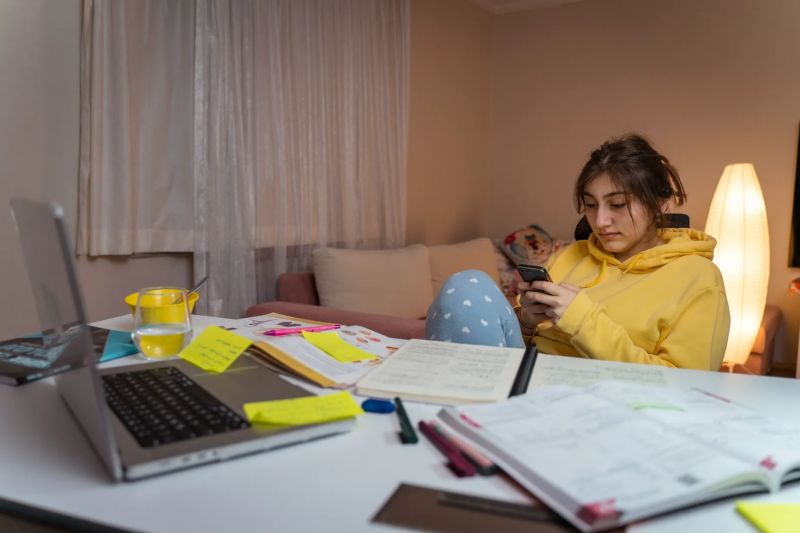
One in two young people frequently feels lonely.
According to a study, for many, the first reflex is to reach for their phone.
But the hope of digital togetherness is deceptive.
Nearly half of 14- to 20-year-olds frequently or occasionally experience loneliness – and then use social media to feel less lonely.
At the same time, there’s a clear correlation between intensive use & increased feelings of loneliness,” according to The New Youth Study by The Vodafone Foundation.
The study indicates that around half of the young people surveyed see loneliness as a “daily burden.”
Female adolescents are more frequently affected than male adolescents.
The pressure caused by loneliness is perceived by those surveyed as being just as intense as school stress, anxieties about the future, or mental exhaustion.
From the young people’s perspective, it is not an individual problem, but a societal one.
The Study: What’s it about?
For the study, the opinion research institute Infratest dimap surveyed
1.050 young people between the ages of 14 and 20.
Title: Generation Lonely?
Social Media, Loneliness, & Coping Strategies in the Lives of Young People.” The data was collected in May 2025.
“Loneliness among young people is not an isolated individual phenomenon, but rather an expression of a societal shift that is also connected to the way relationships are lived today,” says the director of the Vodafone Foundation.
How schools could help combat loneliness:
New school-based programs could be more successful.
Loneliness should not be treated as a taboo subject, but rather addressed proactively: with educational programs to support the personal development of young people, with a focus on emotional stability, “and through schools that create spaces for belonging, shared experiences, & personal connections.”
The young people surveyed also hope that schools will play a key role in addressing loneliness.
“Many would like targeted support services & a greater focus on social and emotional issues,” the study states.
84 percent described such services in the school environment as “important” or “very important.”
Data from a study of American children suggests that those who spend a lot of time on social media have poorer language & memory skills.
According to the study, teenagers who spend a lot of time on social media perform worse on reading, memory, & vocabulary tests.
This is the finding of a study by a group led by pediatrician Jason Nagata from the University of California, San Francisco, published in the “Journal of the American Medical Association.”
“Roughly one-fifth of young adults feel extremely lonely.”
It was apparently not a COVID-19 phenomenon: Even years after the pandemic, studies show that younger people in particular feel lonely.
Experts speak of “persistent psychosocial stress.”