
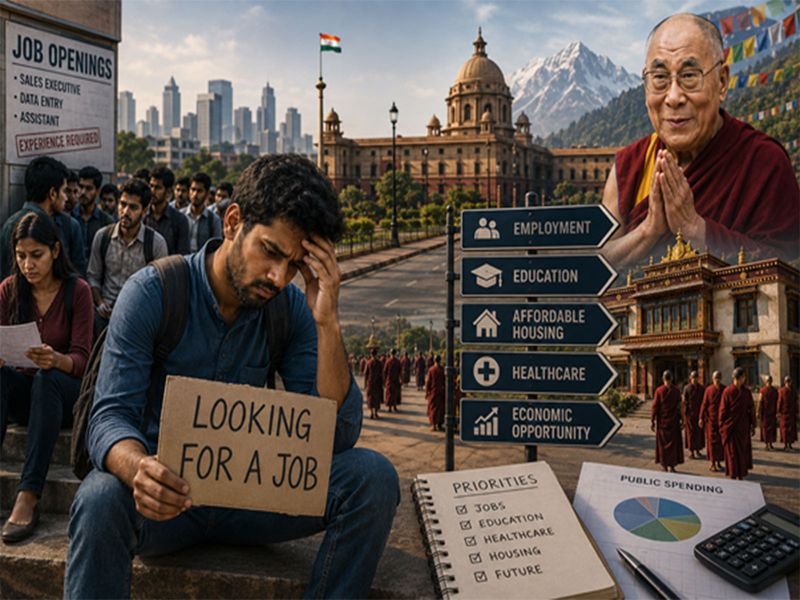
For many young people in India, securing a government job has long been viewed as the most reliable path toward financial security, social status, and long-term stability. Government positions often provide greater job protections, benefits, and employment security than much of the private sector, making them highly sought after despite fierce competition.
However, the demand for these positions far exceeds the number of jobs available. As a result, millions of young people spend years preparing for highly competitive entrance examinations, often delaying their entry into the workforce. Recent controversies surrounding examination paper leaks have intensified public frustration, with many questioning the fairness and transparency of the recruitment process.
The issue extends beyond testing. India’s rapidly growing youth population is entering a labor market that has struggled to create enough stable, well-paying jobs. While economic growth has expanded educational opportunities, many graduates continue to face limited prospects for secure employment. This gap between educational attainment and available jobs has become a significant economic and social challenge.
At the same time, evolving technologies—including artificial intelligence—are expected to reshape labor markets worldwide, creating additional uncertainty for young job seekers. For India, home to one of the world’s largest youth populations, ensuring meaningful employment opportunities will be critical to supporting economic development, social stability, and the aspirations of future generations.
Addressing these challenges will require continued investment in education, transparent hiring practices, workforce development, and policies that encourage the creation of quality jobs across both the public and private sectors.
Source: Adapted from reporting and analysis originally published by The Economist.