اوپڑ دی گڑ گڑ دی اینکس دی بے دھیانا دی مونگ دی دال آف دی پاکستان اینڈ ہندوستان در فٹے منہ
This iconic macaronic absurdist couplet, ending in bathetic invective, from Saadat Hasan Manto’s seminal 1955 afsaana Toba Tek Singh resounds in the mind and heart as if re-living the trauma of division. Watching Imtiaz Ali’s romantic Partition drama Main Vaapas Aaunga (I Will Return) reignites this haunting lack of closure. Named after a district in Pakistan’s Punjab (originally founded by a compassionate Sikh holy figure who provided water to weary travellers), Toba Tek Singh became Manto’s ultimate metaphor for the nonsensical borders etched across human lives. Borders drawn in ink became exile etched in bone. In that asylum between two flags, humanity itself was declared insane.
On the morning of the 14th of August, the flags rise in Islamabad and across every city and village of Pakistan. Children in school uniforms recite the national anthem, and the air carries the sound of speeches about freedom and sacrifice.
Spanning three generations, the film Main Vaapas Aaunga tells the story of an unfulfilled covenant, a word of honour given by a Sikh grandfather, Israr Singh Grewal, to his Muslim beloved in Sargodha, severed when non-Muslims were forced to flee West Punjab while Muslims were coerced out of East Punjab.
This persistent yearning exposes how the subcontinent handed its destiny over to colonial masters. Independence Day asks us to celebrate, and rightly so. It also asks us to remember, because a nation that forgets how it was born cannot know where it is going.
Borders drawn in ink became exile etched in bone: in that asylum between two flags, humanity itself was declared insane
The unresolved trauma stems from a staggering bloodbath, with estimates ranging between 200,000 and 2 million deaths, and a widely accepted consensus of around 1 million lives lost to communal violence, starvation, and disease. It was the largest forced migration in human history, uprooting 12 to 20 million refugees across newly fissured borders in Punjab and Bengal. Tens of thousands of women endured abduction, rape, forced conversions, suicides, and murder.
When asked by Raza Rumi at a recent lunch, “How are you an affectee of migration?”, The answer came unbidden: “ I am Karachi girl living in Islamabad.”
To leave the city of one’s birth is a small dispossession, but the intergenerational trauma of migration is inexpressible. The deeper archive lives in my mother.
Ami still remembers her ancestral haveli in Ajmer, India, where her grandfather served as Postmaster General—an Indian Civil Service officer at the time of Partition. He never wanted to leave the home where his elders had served for generations as Qazis and judges in the royal courts of the Maharajas of Jaipur, Rajasthan. But when their haveli was set ablaze, choice was stripped away too. To save the rest of the family, they were forced to migrate, leaving behind a married daughter and a son in the chaos of a fracturing land.
They endured the erosion of original roots, requiring the adoption of new customs simply to survive; the lingering loss of refined social heritage, historical societal norms, and community continuity; and the persistent phantom pain of ancestral food memories and complex genetic fusions etched into human consciousness, among other side effects of being uprooted from home.
That longing is not new. It is as old as Homer. This deep-seated longing mirrors Christopher Nolan’s Odyssey, adapted from Homer’s epic poem of Odysseus and his decade-long struggle to return home after the Trojan War. Why crave home when victory, wealth, and pleasure lie at your feet? It is the unyielding gravity of one’s motherland, a force that may seem surreal to detached observers, but makes complete sense to those who love. To those who have never been displaced, it sounds mythic. To those who have, it is physics.
At the Faiz Festival, discussions surrounding The Other in the Mirror: Stories from India and Pakistan (edited by Sehyr Mirza) emphasised that its Partition narratives contained no idealised “love stories”—only raw, everyday life as it unfolded. Yet, when literary critics dismiss love stories, one is reminded of Faiz Ahmed Faiz’s enduring line, and I would add (کیا):
“اور بھی دکھ ہیں زمانے میں محبت کے سوا ” کیا
“(Are) there are other sorrows in this world besides love?”
Partition itself is an unfinished love story crying out for emotional closure.
While historic dreams, such as a unified Greater Punjab or the distinct emergence of Bangladesh, reflect shifting political realities, Pakistan and India have both existed as sovereign realities for nearly eight decades. Accepting this statehood is the first step towards healing.
To ensure that future generations are not perpetually shackled to the ghosts of 1947, both nations must transform historical grief into constructive coexistence through key regional pillars:
True peace begins by recognising each other not through the lens of permanent hostility, but through the universal concept of neighbourhood rights. Prioritising human dignity, non-aggression, and peaceful dispute resolution allows both states to safeguard the welfare of their citizenry.
Opening direct trade routes can drastically reduce supply-chain costs, boost local industries across both Punjabs and Bengals, and alleviate poverty. Simplifying visa regimes for religious tourism (such as the Kartarpur Corridor initiative), medical visas, and academic exchanges honours the shared Tehzeeb without threatening state sovereignty.
Ecological challenges do not respect political boundaries. Smog across the Punjab plains, glacial melting in the Himalayas, and water management in shared river basins require active cross-border environmental cooperation for mutual survival.
Literary anthologies, joint cinema ventures, and historic archives must be encouraged rather than suppressed. By confronting history truthfully without hatred, both societies can offer closure to the unresolved grief carried down through generations.
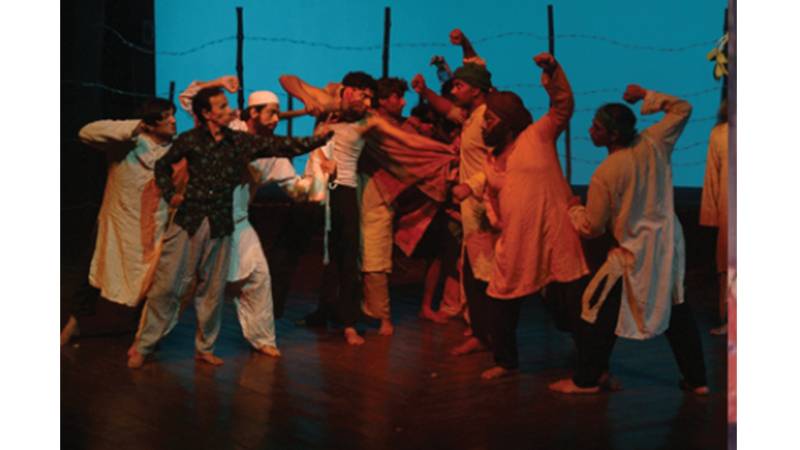
“There, behind barbed wire, was Hindustan. Here, behind the same kind of barbed wire, was Pakistan. In between, on a piece of land that had no name, lay Toba Tek Singh.”
Manto’s nameless piece of land need not remain a monument to madness. Instead, it can stand as a solemn reminder that while lines drawn on maps are permanent, human empathy, shared heritage, and economic wisdom can build bridges over the barbed wire.
This 14th of August, as we raise the green and white, let us raise it with both pride and promise. Pride in the fact that a nation was carved out of immense loss and still learned to stand. Promise that we will remember without bitterness, and that we will allow the displaced to visit home once in a while, if not in body, then in story. Let the exiled be called home, if not by states, then by literature. For in the end, independence is the freedom we owe to our future.