Researchers have long known trauma can be passed down through learned behaviours. But can it also affect people’s genes?
by Alexandra Keeler August 15, 2026
For decades, researchers have known trauma can affect future generations through learned behaviours.
But advances in epigenetics and neuroscience are raising a more difficult question: can trauma also shape people’s biology?
Michael Kobor, a professor of biochemistry and molecular biology at the University of British Columbia, says trauma’s effects are almost certainly passed down to future generations. But the ways this happens are complicated and do not follow a neat, single pathway.
“There could well be [a biological mechanism to trauma], whether it’s small RNAs or a combination of allelic variants,” he said.
“I guess I’m saying it’s messy. Complicated. Multiple things going on.”
‘Secondary traumatization’
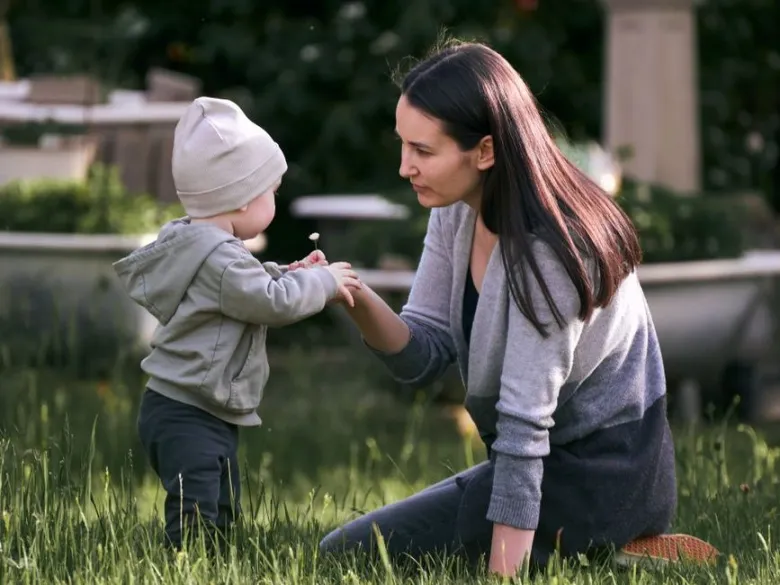
Scientists have long understood that trauma can have intergenerational effects by shaping family relationships and the environments children grow up in.
People living with post-traumatic stress disorder may struggle with emotional regulation, hypervigilance, trust or attachment. If they become parents, their children are at increased risk for anxiety, depression, PTSD and other mental health challenges, research has shown.
Some early clinical evidence of this emerged in Canada in the 1960s, when psychiatrist Vivian Rakoff reported seeing psychiatric problems among children of Holocaust survivors. Clinicians eventually dubbed the phenomenon “secondary traumatization.”
Since then, similar patterns have been documented among families affected by slavery, residential schools, war, displacement and other forms of collective trauma.
Kobor, of the University of British Columbia, says behaviour likely remains the strongest explanation for how trauma’s effects can be passed to subsequent generations.
“There is this sort of indirect behavioural transmission,” said Kobor, who holds the Canada Research Chair in social epigenetics.
“If you experience trauma and turmoil and racism when you were young, when you then become a parent, at least some of these behaviours you kind of impose on your child.”
Epigenetic ‘dimmer switch’
Researchers are now investigating how trauma may produce biological effects that extend to the next generation, including through changes in gene activity.
To understand this, researchers distinguish between the genome and the epigenome.
The genome refers to the complete set of DNA instructions in our cells.
The epigenome consists of chemical marks that regulate how genes are activated, but do not change the DNA sequence itself.
“[G]enes can be either turned on or turned off,” said Kobor. “What the epigenome [does is] serves as a dimmer for those gene[s],” altering how strongly certain genes are expressed.
For example, epigenetic changes can affect the expression of the genes involved in the production of the stress hormone cortisol.
Most chemical marks on DNA are erased and reset between generations, says Kobor. When sperm and eggs are formed, and again shortly after conception, many of the chemical marks that regulate gene activity are wiped away and reprogrammed.
“Basically the methylation is totally wiped out … when the sperm hits the egg, there’s a massive reshuffling,” Kobor said.
This makes it unlikely that a “trauma mark” is hard-coded into genes and passed down unchanged, says Michael Meaney, a psychiatry and neurology professor at McGill University, whose research helped establish that early-life experiences can shape gene expression.
Kobor agrees. “What’s often misunderstood or misrepresented is that because there is an association of epigenetic marks that it’s actually these particular marks that ‘transmit’ the trauma from one to the next,” he said.
But that does not rule out biological transmission in all cases.
One important exception is pregnancy. Research has shown a parent’s trauma or stress can alter their biology, which can in turn affect the environment in which a fetus develops.
Similarly, research has shown that when a mother is depressed during pregnancy, it can change gene activity in the placenta, which can in turn influence how the fetus develops. Meaney’s work suggests these biological effects are often stronger in female fetuses than in male ones.
“It’s very clear that mother’s depression alters both [chemical marks] in the placenta and the activity of genes in the placenta — but the influence is almost exclusively in girls, not in boys,” said Meaney.
Research by Rachel Yehuda, a leading researcher in this field, provides another example of biological differences appearing in the next generation.
Her studies of Holocaust survivors and their children found differences in stress-related biology and regulation of the FKBP5 gene — which plays a role in the body’s response to stress — compared to families who had not experienced the Holocaust.
A 2020 study found this difference was strongest among children whose mothers had experienced the Holocaust during childhood.
The researchers could not establish exactly how the effect was transmitted. But they pointed to several possible explanations, including changes to the mother’s biology during development, effects during pregnancy, changes to egg or sperm cells, and early-life experiences after birth.
For Meaney, such research reinforces the inextricable link between nature and nurture.
“Exposure of the parent to trauma does indeed alter the epigenome of the parent, but it also then subsequently alters the behaviour of the parent, and it is the behaviour of the parent that then transmits an epigenetic signature,” he said.
Markers of resilience
Researchers’ work also suggests biological changes are not set in stone.
“Virtually all epigenetic marks are subject to modification,” said Meaney.
That “plasticity” means epigenetic marks associated with trauma can change in response to therapy, medication and social experiences.
Research that Meaney co-authored with Yehuda found some PTSD-related epigenetic changes shifted after combat veterans completed 12 weeks of prolonged exposure therapy, which gradually helps people confront their trauma-related memories.
“The notion that because it’s in the epigenome, it is immutable to intervention is just wrong,” he said.
The same biological systems that respond to adversity can also respond to supportive environments and positive experiences.
For example, research on caregiving has found nurturing behaviours were associated with epigenetic changes linked to a more moderate stress response.
For Kobor, the next question is not only how trauma leaves a mark, but how people recover from it.
“We always talk about bad news and bad messages,” he said. “What I’d love to see as a story headline is that we identified mechanisms that convey resilience.”
Our work is not possible without subscribers. Become one today.
✓ Unlimited article access
✓ Crosswords on Canadian holidays
✓ Cancel any time
✓ Unlimited article access
✓ Crosswords on Canadian holidays
✓ All Subscriber benefits
✓ The ability to gift a 20% discount on Canadian Affairs subscriptions to your contacts
Latest Posts


Source: https://www.canadianaffairs.news/2026/08/15/the-biology-of-intergenerational-trauma/