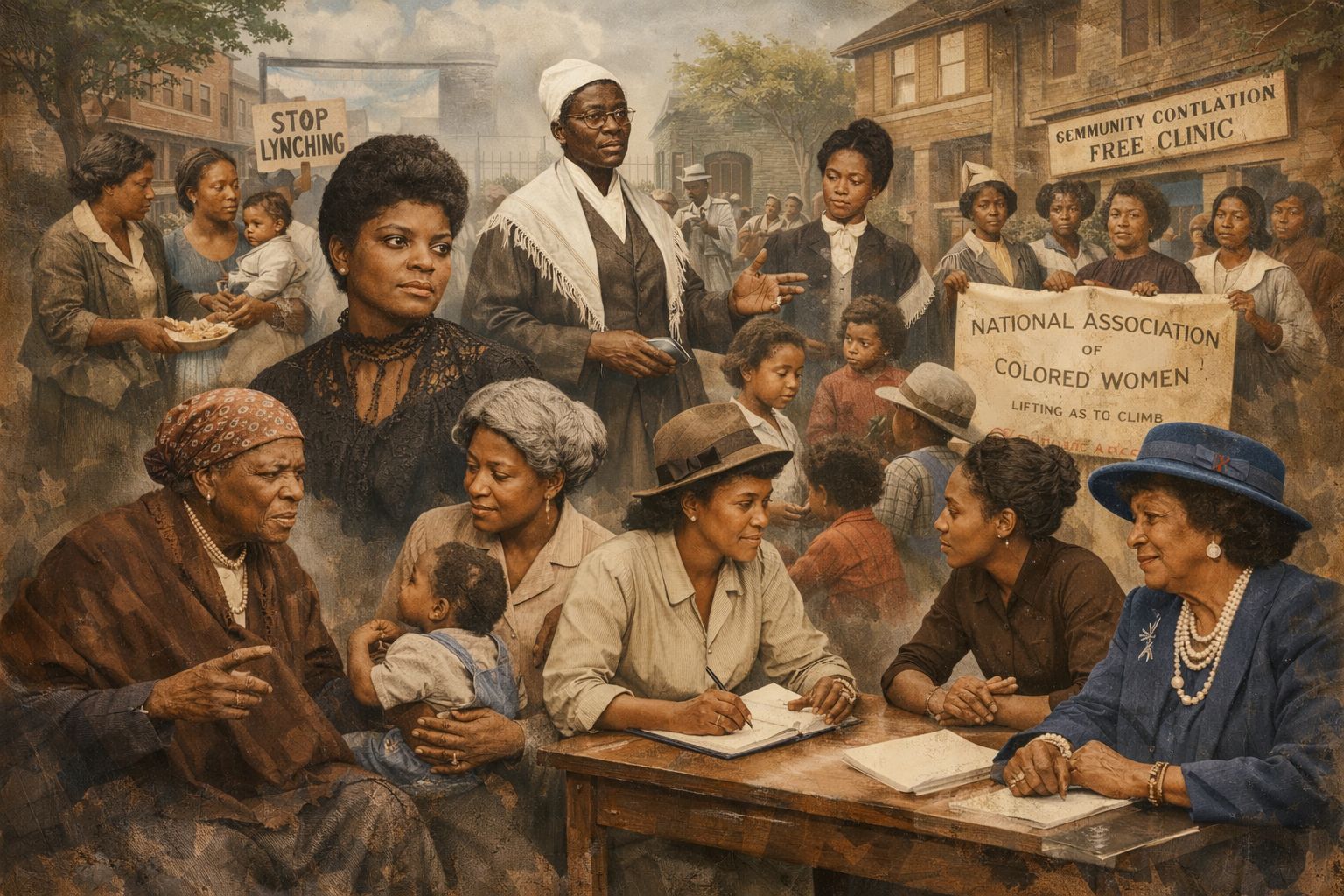
Long before settlement houses, licensing boards, or formalized casework models, Black women were organizing mutual aid, protecting children, advocating for labor rights, addressing gendered violence, and building systems of care in the face of enslavement, segregation, and state abandonment. What we now call social work existed first as survival, resistance, and community care.
Harriet Tubman did not just lead people to freedom. She coordinated housing, medical care, food access, elder support, and wartime relief for formerly enslaved people and Black soldiers. Her work reflects crisis intervention, case management, and community organizing decades before those terms existed.
Sojourner Truth engaged in advocacy around housing, employment, family reunification, and protection from violence for Black women navigating post-emancipation life. Her work sits squarely at the intersection of policy advocacy, gender justice, and social welfare.
Ida B. Wells conducted early forms of social investigation and public reporting, documenting racial terror and its social consequences. Her anti-lynching work reflects an early evidence-based approach to systemic harm, linking violence to public policy, economics, and social conditions.
Anna Julia Cooper and Mary Church Terrell advanced education, labor protections, and family stability through organized advocacy, institution-building, and community leadership. These efforts functioned as macro social work long before the profession acknowledged its own macro foundations.
During the settlement house era, Black women were often excluded from white-led institutions, so they built their own. Black women’s clubs, mutual aid societies, church-based welfare systems, and schools operated as parallel social service infrastructures. These spaces addressed poverty, illness, child welfare, elder care, and education when no formal systems would.
Later, Black women such as Inabel Burns Lindsay and Dorothy Height formally entered and shaped the profession, while also challenging its racial exclusions. They did not introduce social justice into social work. They insisted the profession live up to what Black women had already been doing for generations.
Social work did not originate in universities. It originated in communities responding to harm with care, strategy, and courage.
Black women were not simply participants in the early history of social work. They were its architects.
If we want to be honest about our profession’s roots, ethics, and future, we have to start there.