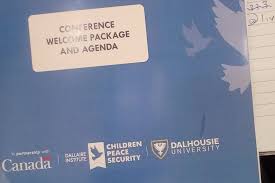
Sustainable peace in Africa will remain out of reach unless children are seen not only as victims of conflict but as essential architects of future stability. That was the resounding message in Nairobi last week as stakeholders gathered for the landmark Global Conference on Advancing Children’s Roles in Peace Processes and the Vancouver Principles.
Held from November 17–19, 2025, and hosted by the Dallaire Institute for Children, Peace, and Security, the gathering carried a sombre recognition of the harsh realities facing the continent’s youngest populations.
Leaders from across Africa, Canada, and international peace institutions urged policymakers to move beyond symbolic gestures and ensure that children’s perspectives are meaningfully integrated into peace processes.
The conference brought together mediators, security chiefs, diplomats, senior African Union officials, UN agencies, civil society organisations, and importantly, children and youth from across the continent.
Dr Shelly Whitman, Executive Director of the Dallaire Institute, set the tone early. “This gathering is more than a conference. It is a critical step to ensure that children are not only protected from conflict but recognised as agents of positive peace,” she said in her opening remarks.
She began by honouring young participants by introducing them first. “Protocols would require me to introduce government officials first. But this is a conference on inclusion of children, and I want everyone to remember that from the moment we begin.”
Whitman invoked the eighth anniversary of the Vancouver Principles—global commitments to prevent the recruitment and use of child soldiers—highlighting Principle 14, which calls for integrating children’s perspectives into peace processes.
She also underscored the broader effort of the Dallaire Institute across the continent, explaining that with support from Global Affairs Canada, the Institute is implementing a multi-country project spanning seven sub-Saharan African countries, with activities that strengthen child protection practices and promote children’s inclusion across peace and security interventions.
Director of the Dallaire Institute’s African Centre of Excellence in Kigali, Maj Gen (Rtd) Ferdinand Safari, expanded the scope of the crisis. “Today, as we meet, Africa and the whole world is facing sobering realities,” he said. “According to the United Nations, violence against children in armed conflict has reached historically disturbing levels, with a 25 percent increase in grave violations in the past year alone.”
Maj Gen (Rtd) Safari noted that behind these numbers lies the “lost promise of peace itself.”
“Children shouldn’t be considered passive beneficiaries of peace,” he stressed. “They are witnesses, survivors, and must be meaningful partners in shaping peace.” He highlighted regions like the Sahel, the Horn of Africa, Central Africa, and the Lake Chad Basin—hotspots where children face recruitment, displacement, and the collapse of educational systems.
Speakers reiterated that involving children is not an act of charity, but a legal and moral obligation.
Representing the Kenyan government, Director of Peace and Security at the Ministry of Foreign and Diaspora Affairs, Mr Arthur Olanda, affirmed Kenya’s commitment to placing youth and children at the centre of peacebuilding. “Sustainable peace is only possible when grounded in the protection, empowerment, and genuine inclusion of all people, including children and youth,” he said.
Mr Olanda highlighted the National Action Plan on Youth, Peace and Security, Kenya’s support for IGAD’s Child Policy Framework, and community initiatives such as the Children Peace Initiative Kenya, which engages young people in dialogues in conflict-prone pastoralist regions.
He said over 400 million young people globally live in fragile or conflict-affected settings, many carrying an “intergenerational burden.”
He reminded delegates that children’s participation is a legal obligation under Article 12 of the UN Convention on the Rights of the Child and regional frameworks such as the African Charter on the Rights and Welfare of the Child and the AU’s Agenda for Children 2040. “This right does not disappear during emergencies or conflict. States must actively remove barriers that prevent children from being heard.”
He recalled the 2022 Children Affected by Armed Conflict Conference where child delegates from Ethiopia, Mozambique, Nigeria, and Somalia spoke candidly about displacement, hunger, and attacks on schools.
“Their clarity was humbling,” he said. “When children speak, we do not hear innocence, we hear truth.”
Child delegates issued concrete recommendations, from resolving conflicts through dialogue before escalation, to endorsing the Safe Schools Declaration, rebuilding destroyed schools, and prosecuting human-rights violators.
The African Union (AU) affirmed its commitment to child protection amid rising instability. Ambassador Frederic Gateretse-Ngoga, Senior Adviser on International Partnerships, warned: “We are gathered here when conflicts are increasing on the continent and where the recruitment of children in armed groups, their use as soldiers, messengers, spies, or in other abusive roles is rising instead of declining.”
He added that “at least more than a half of AU member states are experiencing tensions or crises,” and that the Vancouver Principles are “constantly being violated, ignored, or disrespected.”
He emphasised that the AU’s commitment is “unwavering,” supported by the African Charter on the Rights and Welfare of the Child—the only regional treaty explicitly prohibiting the recruitment or direct participation of children under 18 in hostilities.
He noted that AU Peace Support Operations increasingly integrate child protection advisers, with missions like Amisom/Atmis in Somalia working to prevent recruitment by groups such as Al-Shabaab.
Ambassador Gateretse-Ngoga closed with a call grounded in African philosophy: “In order for us to achieve this in our current unstable environment, we will need to arm ourselves with Ubuntu—humanity towards others—to protect Abantu (people), and in this case children and their Ibintu (property).”
Canadian High Commissioner to Kenya, Joshua Tabah, described Africa’s role in global stability as “essential.” “Canada believes that African leadership is central to sustainable peace,” he said. “We are committed to amplifying local voices, especially those of children and youth.”
Canada, which launched the Vancouver Principles in 2017 and remains their global champion, reaffirmed its support for African-led peace approaches. Through Global Affairs Canada, it supports the Dallaire Institute’s multi-country initiative in sub-Saharan Africa and works closely with the African Union on child protection.
More than 100 countries have endorsed the Vancouver Principles, which focus on preventing the recruitment and use of child soldiers.
“Children and youth are not only victims of conflict,” Tabah emphasised. “They are agents of change and builders of peace. Peace is not truly peace unless it includes them.”
Throughout the conference, a central theme emerged: a shift from viewing children merely as recipients of protection to recognising them as contributors to peacebuilding.
Whitman returned to challenge adult delegates on accountability. “Our complicity in the face of unspeakable horrors against children is a stark reminder of how much work we must do to redefine peace and how we achieve it,” she said.
In one of the strongest moments of the conference, she urged leaders to confront their role in global instability. “World leaders who disregard international law, use profanity, or prioritise lining their own pockets over public good undermine the very peace they claim to seek. If each one of us asked whether our actions would make our children proud, many of us might be deeply disappointed.”
Over two days, delegates examined how to translate Vancouver Principle 14 into action. Whitman urged security actors, mediators, and policymakers to work collaboratively rather than in silos. “Peace is not achieved through agreements alone,” she said. “It depends on whose voices are heard and whose protection is prioritised from the very start.”
As Maj Gen Safari concluded, children should not have to wait for adults to “figure things out.” “Our children—the future of our continent and the world—deserve safety, dignity, and a voice not tomorrow, not in a few days, but now. Today.”