The Metals Company wants to be the first firm to commercially mine the seafloor. The study it funded suggests that mining vehicles harm creatures in the machines’ paths
Sara Hashemi – Daily CorrespondentDecember 10, 2025
:focal(480x247:481x248)/https://tf-cmsv2-smithsonianmag-media.s3.amazonaws.com/filer_public/60/d3/60d30eba-1c69-4aec-8296-908bed96eae3/deep-sea-mining-diversity-species-full-widthjpgthumb960960.png)
As demand soars for critical minerals for electronics and renewable energies, experts have debated the risks and benefits of extracting these materials from the ocean floor. But an extensive new study reveals how harmful deep-sea mining can be for seabed creatures.
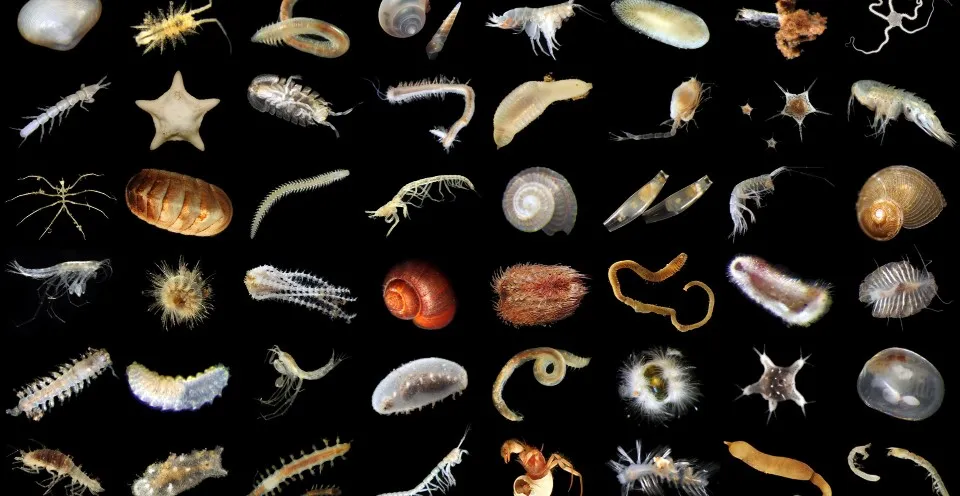
The work, funded by Canadian ocean mining firm the Metals Company, examined tiny critters living on or in the seafloor, and found that the number of animals—and their diversity—dwindled in the wake of a mining vehicle’s test run. The findings were published December 5 in the journal Nature Ecology and Evolution.
“Critical metals are needed for our green transition, and they are in short supply. Several of these metals are found in large quantities on the deep-sea floor,” says Thomas Dahlgren, a study co-author and marine biologist at the University of Gothenburg, in a university statement. “But until now, no one has shown how they can be extracted or what environmental impact this would have.”
Quick fact: How are nations reacting to deep-sea mining?
In April, President Donald Trump issued an executive order to fast-track permits for ocean mining. The United States is joined by the Cook Islands, Norway and Japan as major supporters of the practice. But 40 countries call for a pause or ban on deep-sea mining.
The Metals Company aims to be the first firm to commercially mine the ocean floor. Past research on deep-sea mining’s effects on marine life has turned up mixed results, and the studies’ methods had limitations, the authors write in the paper. So, the Metals Company spent around $250 million to fund its own study, which spanned about five years.
Part of that work involved 160 days at sea in the Clarion-Clipperton Zone (CCZ), a roughly 2.3-million-square-mile area between Mexico and Hawaii. This deep-sea floor region is home to an estimated 46 trillion pounds of egg-sized hardened lumps—or nodules—comprised of valuable minerals like nickel and cobalt, making the CCZ a target for mining companies.
During the study period, researchers gathered 80 samples of the seabed—about 14,000 feet below the surface—within two years before and two months after a deep-sea mining test in 2022. The samples held more than 4,000 creatures considered macrofauna, animals ranging in length from about 0.01 inch to 0.75 inch, the team found. That included 788 identified species of worms, sea spiders, mollusks, crustaceans and other creatures.
Analyses revealed that after the mining test, the number of animals in tracks left by the mining vehicle dropped 37 percent, compared with the number just one month before the trial. The variety of species also fell by 32 percent in the same timeframe. That trend wasn’t seen in control sites or the area affected by the sediment plume churned up by the vehicle.
Still, researchers know little about the creatures there.
“We’ve actually only sampled such a tiny proportion of the deep sea,” says study co-author Eva Stewart, a marine biologist at the Natural History Museum, London, to the New York Times’ Sachi Kitajima Mulkey. Thousands of other undescribed species might be living there, too, she tells outlet. “We just haven’t seen them yet.”
/https://tf-cmsv2-smithsonianmag-media.s3.amazonaws.com/filer_public/fa/2a/fa2a160b-4aaf-46c1-8739-b61dad66c4b2/deltocyathidae.png)
The Metals Company tells the BBC’s Georgina Rannard at that it’s encouraged by the results. “After years of activist alarm that our impacts would spread thousands of kilometers beyond the mine site, the data show that any biodiversity impacts are limited to the directly mined area,” a company spokesperson tells the outlet.
But the findings still worry some experts.
“I think the study shows that current technologies for harvesting are too damaging to permit large-scale commercial exploration,” says Patrick Schröder, a climate policy expert at the British thinktank Chatham House, to the BBC. “These were only tests, and the impact was significant. If they did that at large scale, it would be even more damaging.”
A study published in November on the impact of deep-sea mining found that waste discharged from deep-sea mining operations in the CCZ may harm more than half of all zooplankton and micronekton, tiny free-swimming organisms that play an important role in the food web. But another study published in March suggests that while mining caused long-term changes to sediments, many creatures can recover.
As the debate over deep-sea mining ramps up, scientists will continue conducting research that assesses its impact.
“It is now important to try to predict the risk of biodiversity loss as a result of mining. This requires us to investigate the biodiversity of the 30 percent of the Clarion-Clipperton Zone that has been protected [by environmental regulations],” says Adrian Glover, a study co-author and deep-sea ecologist at the Natural History Museum, London, in the statement. “At present, we have virtually no idea what lives there.”