
More clean energy, less climate risk
ICYMI: check out the NY-12 candidate forum we co-hosted. And for your calendars, our next happy hour is May 12.
April 22 is both Earth Day and 21 days past the New York State budget deadline. There are multiple items holding up budget negotiations, including the push to reform car insurance, introduce a vacant second home tax (pieds-à-terre for French speakers and those in the know), modernize environmental review, and amend the state’s climate law (CLCPA) targets. We are excited about many of the Governor’s proposals, including the pieds-à-terre tax, which we think would work well for the reasons explained here, and efforts to modernize SEQRA to make it easier and faster to build more housing, which we support as a member of Unlock NY’s Future coalition and recommended in our policy agenda.
On the occasion of Earth Day, we thought it worthwhile to talk about some of the progress that New York has made on climate policy and where we think more could be done to hasten clean energy development and ensure that New Yorkers are safe from the impact of climate change.
More Clean Energy
New York’s lawmakers were right to set ambitious goals to reduce carbon emissions in passing CLCPA. But the goals are only as good as the plan, actions, and processes you develop to meet them. Here, there is more to do. Notably, even when extensive federal funding was available, researchers found that state and local permitting and other regulations blocked up to one-third of emissions reductions from that funding. The State Office of Renewable Energy Siting and Electric Transmission (ORES) has made progress centralizing and streamlining the permitting process for larger scale renewable energy projects, which reduces the regulatory fragmentation that slows development. Expanding the mission to transmission was also a positive step. And there have been multiple additional actions that have sped clean energy deployment. But more is needed.
Centralized Resource Planning
New York could be doing more to coordinate its power infrastructure to meet its goals. The state lacks a method of coordinating across the New York Independent System Operator (NYISO), utilities, and the New York State Energy Research and Development Authority (NYSERDA) to ensure adequate generation capacity and transmission infrastructure. This institutional mismatch means New York is simultaneously pursuing massive electrification, planning new electricity-intensive industries, and retiring fossil fuel plants without a coherent plan for how the pieces fit together. Illinois recently passed legislation establishing a centralized, integrated resource planning model that coordinates across utilities, grid operators, and state agencies. Proponents of the reform savvily framed it around affordability needs. For New York, integrated resource planning would align key stakeholders around a coherent strategy that identifies where new generation is needed, what transmission upgrades are required, and how to sequence investments to meet both reliability and climate goals cost-effectively.
More Solar, Transmission, and Battery Storage
To expand solar power, the State should double the tax credit from $5,000 to $10,000, preempt local bans and excessive regulation of rooftop solar, and automate permitting (including in the City, building on City of Yes zoning reform). We are pleased to hear that many of these measures are being considered in budget talks right now and we hope they are successful. These measures should be paired with efforts to improve transmission and battery storage. Specifically, the State could prioritize highway and railroad rights-of-way for transmission and direct the relevant actors to proactively build the transmission required. ORES, which has taken on major clean energy generation siting and transmission approvals, could also take on battery storage projects, which face significant opposition locally across the state. There are understandable fears associated with these projects, but thoughtful safety requirements and emergency management planning can make these necessary facilities workable and centralized statewide standards can bring clarity for all involved.
More Clean Energy Choices
Finally, we strongly support the Governor’s leadership to expand nuclear and geothermal power across the state. Opponents of these power sources sometimes argue that wind and solar are cheaper and have fewer drawbacks. This may be true, however, Governor Hochul is wisely choosing to swim with the federal current when it comes to advancing these power sources, which are the only two clean energy sources that the Trump Administration supports. She has had to fight (and win) on wind and solar, but she can cooperate on nuclear and geothermal, which add to New York’s capacity in an era of electrification and AI expansion. The State should continue to advance nuclear power by exploring financing programs and to support geothermal by developing on public sites where appropriate and exploring public purchasing agreements.
A More Resilient New York
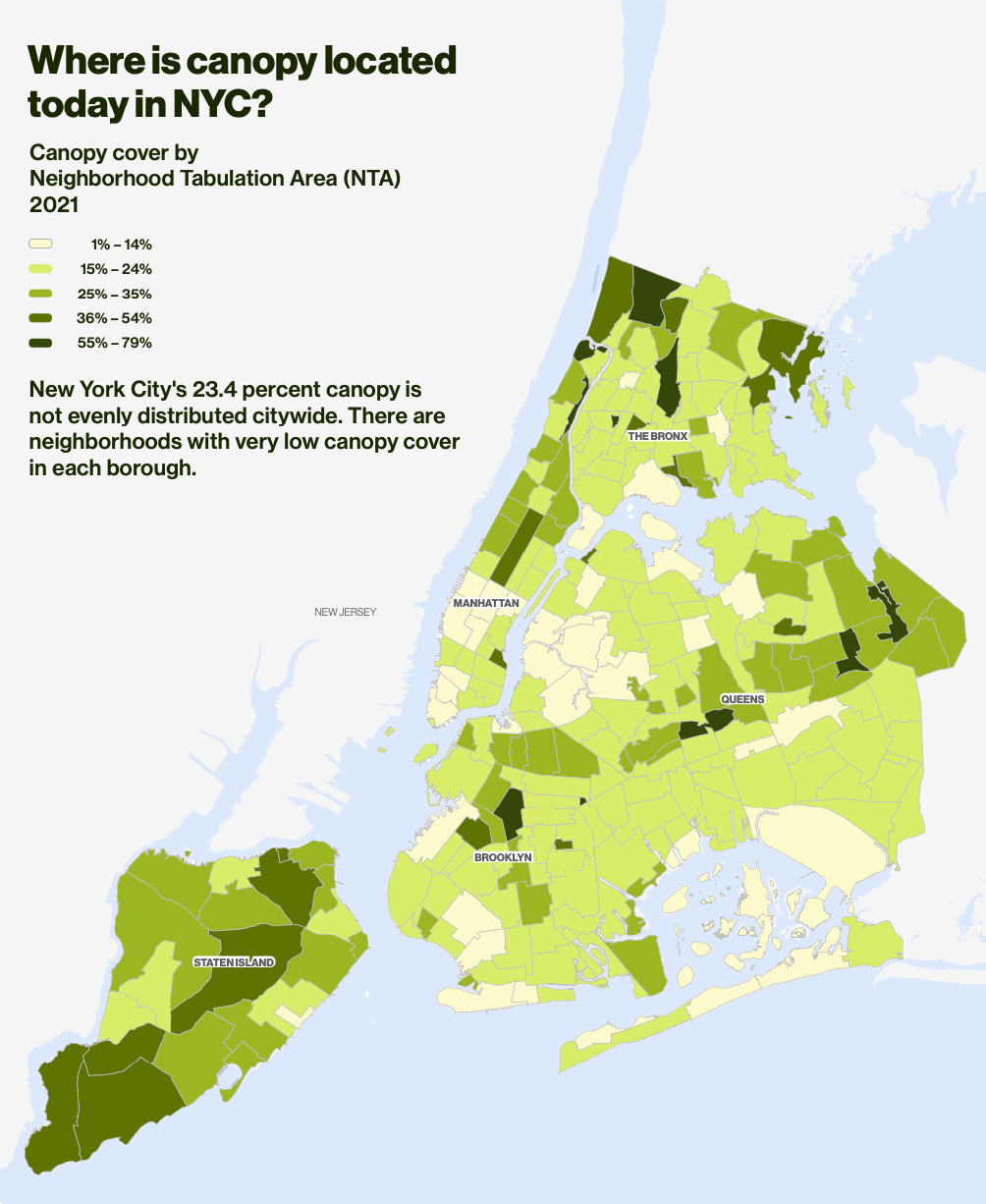
Lost in the fight over CLCPA is climate resilience. While it is important to fight for a better future, our emissions and land use decisions have already changed the climate. Our summers are hotter and our storms are wetter and stronger. Heat causes more than 500 deaths annually in the City, with mortality rates twice as high among Black New Yorkers compared to white New Yorkers. Low-income neighborhoods can be between five and 20 degrees hotter than affluent areas due to less tree canopy and more impervious surfaces. Winter, as we all remember, also kills. While some progress has been made, another storm like Ida or Sandy would still kill too many people.
More Trees
We are thrilled to see the Mamdani administration push for 30% canopy coverage by 2040, prioritizing more vulnerable communities first, as our agenda recommended. Advocates point out that the goal needs funding commitments behind it and we agree, but we also recommend streamlining the procedural steps behind planting trees, some of which the City’s new urban forest planaddresses. In some cases, multiple agency permits may be necessary to plant a tree; the City could further reduce these barriers to speed the process.
Easier Buyouts
The State should streamline the buyout process, by which the government can purchase property and turn it into a park or other safe use and get people out of harm’s way. According to the Regional Planning Association, 19,000 housing units, homes to 40,000 New Yorkers, are at risk of loss due to coastal flooding by 2040 (not including inland rain-driven flooding). We and many others point out that the City and State need to upzone dramatically, especially in areas safer from climate impact, to create room for the region to grow and to create homes for New Yorkers who could be displaced. But to get people from risky homes to safer homes, the City and State need to dramatically streamline the buyout programs. After Hurricane Sandy, property buyouts took three years or more to complete, leaving families in limbo while living in damaged homes or temporary housing. Some waited so long they gave up and rebuilt in flood-prone areas; others who actually took the buyout ended up in other flood zones. There has been meaningful progress to develop the State’s buyout program, some of which is hampered by the assumption that buyouts will use federal funds and thus be subject to federal environmental reviews and other procedures, but the Legislature could take another look at what parts of state law, rules, and procedures it could waive to speed the means by which the government could voluntarily get people to safety.
A Resilience Authority
Finally, while New York faces huge challenges in building resilient infrastructure (e.g., flood walls, levees, major projects), it faces fragmented city and state agency jurisdiction and funding sources. To meet this challenge with the urgency necessary, the State should create a new resilience authority, akin to the MTA or other authorities, with the power to build major resilience projects, lead a statewide resilience plan, and partner with federal agencies to secure funding. We do not call for new public entities lightly, but New York needs a more centralized, empowered focus on resilience, as others have noted. In creating this new authority, the State should carefully consider what procurement, land use, environmental review, and other procedures can be waived for its projects, or consider alternative streamlined rules to treat the climate emergency as such. It is notable that in the event of a climate disaster, e.g, when a hurricane hits, the Governor and Mayor can use emergency authority to keep people safe, but when it comes to doing the cheaper, safer, proactive work to reduce risks for whole communities, the administrative barriers compound. We can and must fix that.