
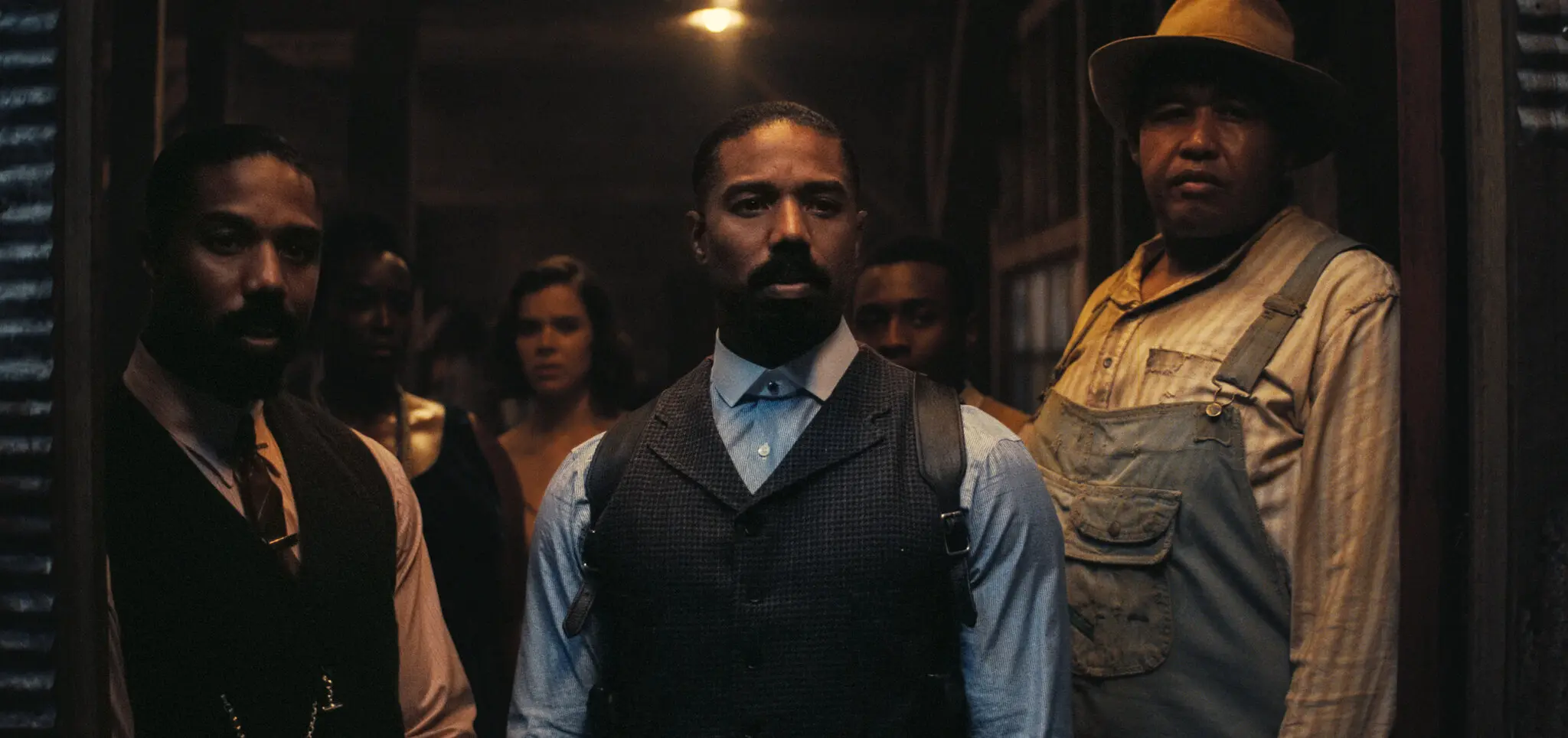
Across film (“Sinners,” “One Battle After Another”), theater (“Ragtime”) and TV (“The Lowdown”), four works suggested what achieving racial equality in America would take.
Dec. 23, 2025
In our era of hyperpolarization, much of our art this year seemed to agree on one thing: The best vantage for exploring our times was from the political middle.
It was a thought that grew as I saw works of film, stage and TV that explored ideas of racial injustice become some of this year’s biggest critical and commercial successes. I noticed starting last March when I went to see the brilliant box-office hit “Sinners,” and it revved up this fall, with the sweeping film “One Battle After Another”; the Broadway revival of the musical “Ragtime”; and the Tulsa-based TV thriller, “The Lowdown.”
In these, white liberal characters either struggle with their allegiance to racial equality or center themselves in finding solutions.
There is less despair in them than I initially assumed: The really racist characters they depicted were so extreme that audiences could reject self-identification. And yet, these works still propose that there are significant limits on the kind of cross-racial solidarity possible, while agreeing that perhaps the most urgent cultural concern isn’t who is pitted against us, but discerning who our real friends are.
In Joshua Henry’s extraordinary “Ragtime” performance, the character Coalhouse Walker Jr., a Black pianist turned radical, is even more central to this year’s Broadway revival of the show than in the source material of E.L. Doctorow’s 1975 novel, the 1981 movie version or the Broadway original that premiered in 1998. But the biggest character transformation, in this Lear deBessonet-directed production at Lincoln Center Theater, belongs to Father (Colin Donnell), the stoic, upper-class white businessman whose racial conservatism puts him at odds with more progressive members of his family.
Salamishah Tillet is a contributing critic at large for The Times and a professor at Rutgers University. She won the Pulitzer Prize for criticism in 2022, for columns examining race and Black perspectives as the arts and entertainment world responded to the Black Lives Matter moment with new works.
A version of this article appears in print on Dec. 27, 2025, Section C, Page 7 of the New York edition with the headline: What Does Racial Solidarity Really Look Like?. Order Reprints | Today’s Paper | Subscribe
Source: https://www.nytimes.com/2025/12/23/arts/tv-film-race-solidarity-sinners-ragtime-lowdown.html