Global biodiversity is declining at unprecedented rates, destroying ecosystems and endangering human survival. With the adoption of the Kunming-Montreal Global Biodiversity Framework (GBF) in 2022, the international community took a much-needed policy step toward putting nature on a path to recovery. But its implementation, however, is what will steer the necessary transformative change by addressing the causes of biodiversity loss, from unsustainable consumption and inequality to land and sea use change.
To assess progress in implementation of the GBF, a global review is set to take place at the 17th meeting of the Conference of the Parties (COP 17) to the Convention on Biological Diversity (CBD), to be held from 19 to 30 October 2026 in Yerevan, Armenia. The review will be primarily based on national reports and on a global report on collective progress in the implementation of the GBF. The draft report was discussed in depth at the July–August 2026 meetings of the CBD Subsidiary Bodies.
In its overarching message, the report underlines that, while the GBF has generated unprecedented global engagement, the 2030 goals and targets will not be achieved unless collective implementation rapidly accelerates.
The Kunming Dialogue, which convened in response to the COP 16 request to the Secretariat, discussed the global report and upcoming review in an informal setting. Discussions were held under five topics that mirrored the report’s key messages. Participants addressed the underlying causes of gaps between the collective scope and coverage of the national targets and the scope of the global targets of the Framework. They also addressed how the lack of means of implementation affected implementation efforts and how these challenges can be addressed.
Discussions on action and implementation focused on initiatives and partnerships that can help strengthen implementation efforts to meet national targets and commitments, and what needs to be revised to make them more effective. Participants also exchanged experiences on data systems and processes that enable effective use of available data and knowledge. Finally, discussions were held on how to strengthen whole-of-government and whole-of-society approaches while respecting circumstances and priorities of Parties, Indigenous Peoples and local communities (IPLCs), and other stakeholders.
In parallel with the in-person dialogue, a series of online webinars took place on 7 and 8 September 2026. Inputs collected from the webinars were integrated into the outcomes of the in-person dialogue.
A list of key messages that emerged during the discussions was presented during the closing plenary. A document with a comprehensive list of messages that will feed into the deliberations on the global review will be prepared with the help of the CBD Secretariat and presented at COP 17.
The Kunming Dialogue took place in Kunming, China, from 7 to 9 September 2026. Approximately 300 participants, including Parties, IPLCs, women, youth, and other stakeholders gathered to collect inputs to the global review, including the sharing of best practices, gaps, and solutions.
A Brief History of the Convention on Biological Diversity
The CBD was adopted on 22 May 1992 and opened for signature on 5 June 1992 at the UN Conference on Environment and Development (the Rio “Earth Summit”). The CBD entered into force on 29 December 1993. There are currently 196 Parties to the Convention, which aims to promote the conservation of biodiversity, the sustainable use of its components, and the fair and equitable sharing of benefits arising from the use of genetic resources.
The COP is the governing body of the Convention. Decision making is assisted by three subsidiary bodies: the Subsidiary Body on Scientific, Technical and Technological Advice (SBSTTA); the Subsidiary Body on Implementation (SBI); and the Subsidiary Body on Article 8(j) and other provisions related to IPLCs (SB8j).
The GBF was established by COP Decision 15/4, along with Decision 15/6 that adopts a multidimensional approach to planning, monitoring, reporting, and review (PMRR), including a global review of collective progress in the implementation of the GBF at COP 17. The review will be based on a global report, national reports, and draw upon relevant recommendations of the subsidiary bodies and working groups.
COP 16 also decided to facilitate an informal technical dialogue among Parties and stakeholders on the scientific, technical, and technological aspects of the global report and the sharing of best practices, challenges, gaps, and solutions.
Key Turning Points
Three protocols have been adopted under the CBD. The 2000 Cartagena Protocol on Biosafety addresses the safe transfer, handling, and use of living modified organisms (LMOs) that may have adverse effects on biodiversity, taking into account human health, with a specific focus on transboundary movements. It entered into force on 11 September 2003 and currently has 173 Parties.
The 2010 Nagoya-Kuala Lumpur Supplementary Protocol on Liability and Redress to the Cartagena Protocol on Biosafety provides for international rules and procedures on liability and redress for damage to biodiversity resulting from LMOs. It entered into force on 5 March 2018 and currently has 55 Parties.
The 2010 Nagoya Protocol on Access to Genetic Resources and the Fair and Equitable Sharing of Benefits arising from their Utilization sets out an international framework for the fair and equitable sharing of the benefits arising from the utilization of genetic resources, including by appropriate access to genetic resources and transfer of relevant technologies, taking into account all rights over those resources and technologies, and by appropriate funding, thereby contributing to the conservation of biodiversity and the sustainable use of its components. It entered into force on 12 October 2014 and currently has 143 Parties.
Recent Meetings
2022 UN Biodiversity Conference: Following a lengthy intersessional period due to the COVID-19 pandemic and related restrictions, the first part of COP 15 convened virtually from 11 to 15 October 2021, with a limited number of delegates physically present in Kunming, China. The second part of the meeting, the 2022 UN Biodiversity Conference, took place from 7 to 19 December 2022, in Montreal, Canada. The meeting adopted the GBF, which seeks to address biodiversity loss and guide global biodiversity policy through four overarching goals for 2050 and a set of targets for 2030. It is accompanied by decisions on: a multilateral mechanism on benefit-sharing from the use of digital sequence information (DSI) on genetic resources, including a global fund; resource mobilization; capacity-building and technical and scientific cooperation; a monitoring framework; and mechanisms for PMRR.
2024 UN Biodiversity Conference: Held from 21 October to 1 November 2024, in Cali, Colombia, COP 16 established the SB8j; adopted a decision on the operationalization of the multilateral benefit-sharing mechanism from DSI use, including establishment of the Cali Fund; adopted modalities for ecologically or biologically significant marine areas; and reviewed the development of national targets and the alignment of national biodiversity strategies and action plans (NBSAPs) with the GBF. Following protracted negotiations on resource mobilization, however, the meeting was suspended due to loss of quorum, with a number of decisions left pending.
Resumed Sessions of COP 16: The integrated budget of the Convention and its Protocols was adopted by silence procedure from 3 to 6 December 2024, in the first resumed session of COP 16. The second resumed session took place from 25 to 27 February 2025, at the Food and Agriculture Organization of the UN (FAO) headquarters in Rome. It adopted the remaining decisions on resource mobilization, the financial mechanism, the GBF monitoring framework, PMRR, and cooperation with other conventions.
SBSTTA 27 and SB8j 1: Held back-to-back from 20 to 30 October 2025 in Panama City, Panama, SBSTTA 27 and the first meeting of SB8j focused on GBF implementation and monitoring its progress. SBSTTA 27 approved the annotated outline of the global report on collective progress in GBF implementation and adopted a series of recommendations, many of which contain brackets, reflecting lack of agreement on issues including biodiversity and climate change, and risk assessment and management of LMOs. SB8j 1 also faced challenges and was unable to agree on the modalities for its modus operandi.
SBSTTA 28 and SBI 7: Held back-to-back from 27 July to 1 August and 4 to 12 August 2026, respectively, in Nairobi, Kenya, the meetings focused on the global review of implementation, highlighting both progress and gaps, including on the scope and coverage, action and implementation, means of implementation, whole-of-government and whole-of-society approaches, and data and knowledge.
Report of the Meeting
Jillian Campbell, CBD Secretariat, opened the Kunming Dialogue on collective progress in the implementation of the GBF in support of the global review on Monday morning, 7 September.
In his opening remarks, Huang Runqiu, Minister of Ecology and Environment of China and Co-Chair of the Kunming Dialogue, stressed that convening the Kunming Dialogue is not merely returning geographically to the beginning, but leads to “reembracing our aspirations, reaffirming our pledges, and a new call for action.” He emphasized that political will for biodiversity conservation has grown since the adoption of the GBF in 2022, adding that Parties have been updating their NBSAPs and national targets. Huang added, however, that positive trends have not yet been translated into transformative governance outcomes. He concluded by underscoring the need to strengthen resolve for action and called for seizing the window of opportunity with political will, sense of urgency, and practical measures.
Wang Yubo, Governor of Yunnan Province, China, called for jointly advancing global biodiversity governance. He focused on efforts at the Yunnan Province, noting it is the most biodiversity-rich area in China and at the vanguard of efforts toward ecological civilization. He described initiatives on biodiversity conservation and stressed categories of endangered plant and animal species, whose populations have rebounded due to regional efforts. Wang underscored the links between environmental protection and economic development, emphasizing poverty reduction, inclusive prosperity, and the fair and equitable distribution of ecological benefits.
Nathalie Provost, Secretary State (Nature), Canada, noted that “A Force of Nature: Canada’s Strategy to Protect Nature” recognizes that the protection of nature is a shared responsibility among provinces, territories, municipalities, and Indigenous Peoples, and highlighted the importance of both local stewardship and international cooperation. She stressed that the purpose of the Kunming Dialogue is to put focus on implementation gaps, bring partners together, and share practical solutions and lessons learned.
In a video message, Fabio Arjona, Minister of Environment and Sustainable Development, Colombia, underscored that conserving nature also means generating opportunities for communities, and shared the example of Colombia’s Miracle Homeland and ABC Agenda on Water, Biodiversity and Communities, which contribute to water security and territorial development, among others.
Hambardzum Matevosyan, Minister of Environment, Armenia, and incoming COP 17 President, recalled the important outcomes of the recent meetings of the CBD Subsidiary Bodies in Nairobi, noting these scientific and technical recommendations ultimately need to be translated into policies on the ground. He highlighted that the first global review at COP 17 should not merely be a measure of what has not been achieved, but serve as a catalyst for future action. He welcomed the Kunming Dialogue as a space for constructive engagement, which will also help shape a clear political message for COP 17.
“We are not moving collectively with the pace needed.” CBD Executive Secretary Astrid Schomaker said that the global report on collective progress indicates the GBF has sparked unprecedented engagement, but has also identified gaps between national and GBF targets. She stressed that accelerating progress depends on countries having the necessary resources, capacities, and technologies. Schomaker also noted that the Kunming Dialogue provides an important opportunity for an open and candid discussion, and called on participants to not approach it as negotiators, but “as experts and concerned citizens.”
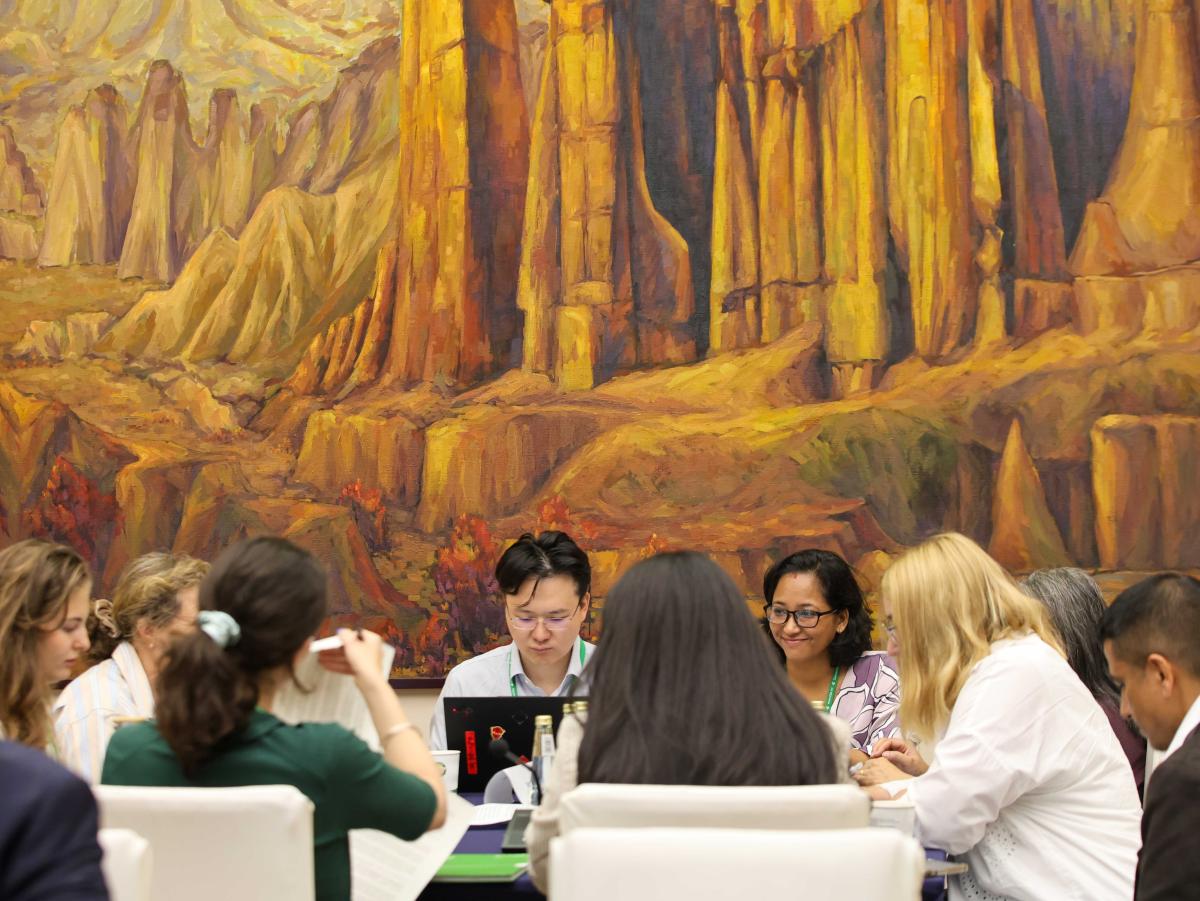
For three days, participants engaged in roundtables addressing gaps and progress identified in the global report, and provided input and best practices for the global review on the way to COP 17. Discussions were divided into five topics: scope and coverage; action and implementation; means of implementation; whole-of-government and whole-of-society approaches; and data and knowledge. Each discussion was guided by two sets of questions.
The roundtables were held in parallel, in an informal setting, with participants switching between topics during breaks. This format created space for vigorous and open discussions, with participants noting they found the format “refreshing and entertaining,” enabling a free flow of ideas and experiences. The Co-Chairs for each topic, supported by the CBD Secretariat, will forward the outcomes of the discussions to COP 17 to inform the global review process. These outcomes include inputs from a series of parallel online webinars held during the first two days of the Kunming Dialogue.
Scope and Coverage
One of the key messages of the global report was that while the GBF has garnered strong political commitment, gaps remain between the collective scope of the national targets and the scope of the global targets of the Framework. The report proposed strengthening political will and commitment to address and overcome these gaps in scope and ambition.
On Monday, Co-Chairs Hesiquio Benítez Díaz (Mexico) and Alexander Shestakov (Russian Federation) introduced the relevant document (CBD/IMP/OM/2026/1/3) and invited participants to discuss: how the GBF targets were reflected in their national targets and commitments; how were their scope and coverage determined; and the underlying causes of gaps between the scope and coverage of national and GBF targets.
While many described an inclusive process during target setting, some emphasized that the development of NBSAPs and national targets was done at the national level, in a short time, and often with limited resources, noting a lack of a sense of ownership by stakeholders.
Participants also highlighted that lack of alignment between national and GBF targets is often due to differing national circumstances and baselines, with not all GBF targets relevant to all countries. For example, one participant offered that their national targets do not include Target 17 (strengthen capacity for biosafety measures), as they already restrict genetically modified organisms. Others commented on how different land tenure systems affect landscape management and protected areas’ designation. Many also highlighted that not all Parties share the same level of responsibility across targets, noting that the GBF avoided addressing the distribution of ambition and responsibility among Parties.
It was also noted by many that while for some regions and political systems setting aspirational targets is encouraged, in others, targets need to be realistic and achievable, and that does not necessarily describe a difference in political will or ambition.
Participants suggested integrating biodiversity action across ministries, but noted differing ministry priorities and expertise, and lack of clearly defined responsibilities as obstacles. Noting advancing geopolitical challenges, one group pondered how to stay ambitious in scope but also realistic, with another proposing framing biodiversity as a national security issue to compel ambition across departments. Many also stressed the GBF is complex to adapt to national strategies, especially on targets related to “highly sophisticated” protocols like Nagoya and Cartagena.
Some participants also noted that perceived gaps on scope and coverage do not always reflect reality in ambition and implementation on the ground. They suggested that target coverage might not be a perfect indicator of the level of implementation as actions can have wider scopes and translating them into targets is not always feasible. Others suggested that regulatory action is often added to existing or overarching development and environmental policies and regulations instead of to the NBSAPs, which can result in its absence from the global report.
Participants noted the need to speed up target setting and regulation in newer areas like pollution. Many stressed the unavailability of baseline data to support target setting, while some pointed out that for resource-constrained countries, ambition is tied to availability of resources.
On Tuesday afternoon and Wednesday morning, the Co-Chairs invited participants to explore approaches for addressing the gaps between the collective scope of national targets and GBF targets, and how such efforts can be measured and assessed to inform future reviews.
Participants observed it is important for the credibility of the process that the level of ambition is reconfirmed. One participant recommended strengthening interministerial coordination so that biodiversity priorities can be embedded in financial instruments and trade agreements, while others stressed mainstreaming biodiversity into the water, food, and energy sectors.
There was broad agreement on the need to strengthen national data mechanisms. A discussion group suggested addressing data gaps by collecting information from more sources than national reports for the second global review.
Some also proposed building information that exists outside NBSAPs into national indicators as a more effective and less resource-demanding way to increase scope and coverage than revising national targets. Others agreed, suggesting increasing the scope by mainstreaming biodiversity in other areas and ministries, and shifting the focus to implementation. On that note, several pointed out that increasing implementation can enhance ambition that will scale up future implementation, creating a virtuous cycle.
Participants also suggested closing the scope and coverage gaps by achieving commitments under other multilateral environmental agreements (MEAs) and international fora, and for Parties that have not yet updated their NBSAPs to consider the global report’s conclusions in their process. Some also proposed raising ambition through coalitions of the willing, which can create a “fear of missing out” effect in international cooperation.
Several cautioned against singling out targets that are easier to advance and suggested focusing on transformative targets that have implications across the board, like Targets 18 (eliminate harmful subsidies) and 19 (increase financial resources for implementation).
One participant suggested requesting prioritization of biodiversity action support from multilateral funds in the decision for the global review at COP 17.
Other key messages on how to address scope and coverage gaps included the need to:
- strengthen cooperation with stakeholders and between ministries;
- scale up bottom-up approaches and cooperation with local and subnational governments;
- mainstream and align biodiversity objectives with other national policies;
- increase transboundary cooperation;
- adopt clear ecosystem boundary definitions;
- provide access to adequate, predictable, and accessible resources to enable developing countries to set more ambitious targets;
- increase blended finance and engage the private sector to support the implementation of GBF targets;
- increase awareness and strengthen environmental education;
- address shifting national priorities and lack of political will; and
- balance conservation and development, including addressing food security.
Action and Implementation
On Monday, Co-Chairs Ossama AbdelKawy (Egypt) and Andrew Stott (UK) encouraged participants to focus on the initiatives and partnerships already in place and those that are needed to strengthen implementation efforts to meet national targets and other commitments and enhance GBF implementation.
The Co-Chairs highlighted the relevant document (CBD/IMP/OM/2026/1/4), provided background information, and emphasized a key message from the global report, which indicates that while implementation is underway across all targets, less than half of the Parties reported that their national targets are on track to meet the global targets. They emphasized the need for accelerated, strategic action tailored to national circumstances, particularly in areas where gaps remain.
Discussions on Monday and Tuesday morning focused on two guiding questions addressing:
- the initiatives and partnerships that could help strengthen implementation efforts to meet national targets and other commitments; and
- whether the existing initiatives and partnerships are able to effectively support Parties and others in their implementation efforts, and if not, what needs to be revised for them to be more effective.
During the discussions, participants centered on ongoing initiatives, highlighting many of them, including the NBSAP Accelerator Partnership, the High-Ambition Coalition for Nature and People, the Biodiversity Finance Initiative, and the Bern Process. They underscored the need to have a solid overview of all existing initiatives, including those led by academic and research institutions, which provide the evidence base for decision making. Many also stressed that creating a separate coalition on a specific topic is not required if a well-functioning one already exists, cautioning against duplication of work.
Participants also underscored the need to enhance synergies across biodiversity-related MEAs and the Rio Conventions’ focal points, leverage political will, and mobilize additional resources. They highlighted knowledge dissemination, including through peer-to-peer learning, regional cooperation, broad stakeholder engagement, and the need to leverage the assessments of the Intergovernmental Science-Policy Platform on Biodiversity and Ecosystem Services (IPBES), including the policy options therein.
On Tuesday afternoon and Wednesday morning, deliberations were guided by two questions:
- how can the application of common approaches and mechanisms between MEAs and other international conventions be more effective; and
- how can synergies and trade-offs between environmental objectives be managed most effectively at local, national, regional, and international levels to achieve the GBF targets.
The Co-Chairs noted that the GBF cannot be implemented in isolation, highlighting the interconnections with other MEAs and conventions. They emphasized that cooperation among conventions can create both synergies and trade-offs and highlighted the need to reduce duplication, increase coordination, and use capacities and resources efficiently.
Participants proposed designing more integrated programmes on the ground, noting the need to involve all relevant actors from the beginning and share additional information with national focal points. They suggested increasing coordination across conventions, including aligning reporting tools and timelines, as well as resource mobilization efforts, using common tracking tools and coordinated indicators, and avoiding duplication of work. They also suggested considering common COP decisions across the Rio Conventions and joint documents on shared priorities for implementation.
Participants called for increasing synergies and cooperation beyond the Rio Conventions through the Biodiversity Liaison Group to include the Ramsar Convention on Wetlands, the Convention on International Trade in Endangered Species of Wild Fauna and Flora (CITES), the Convention on the Conservation of Migratory Species of Wild Animals (CMS), and the Agreement under the UN Convention on the Law of the Sea (UNCLOS) on the Conservation and Sustainable Use of Marine Biological Diversity of Areas Beyond National Jurisdiction (BBNJ Agreement).
They suggested developing joint messages across MEAs and conventions for concrete policy actions with co-benefits and work on promoting coordination at the national and regional levels, bringing together technical and scientific cooperation (TSC) support centres, focal points, ministries, and stakeholders. Participants also noted the need to consider trade-offs during project design and implementation, and integrate biodiversity, climate, and other environmental goals in broad national development frameworks and sub-national and local implementation plans.
Key messages from the sessions include the need to:
- map all existing initiatives, focusing on matching needs on the ground with existing support;
- ensure that COP 17 addresses all existing initiatives, focusing to those working on GBF targets that lag behind;
- broaden the coverage of existing initiatives rather than creating new ones, focusing on targets that require additional attention;
- strengthen TSC support centres as vehicles for driving partnerships at all levels;
- produce outcomes that create political traction, including concrete messages and areas of action, noting the importance of political support and that political momentum increases pressure for domestic action and implementation;
- strengthen engagement with the Rio Conventions and biodiversity-related conventions to enhance mutual learning and promote integrated approaches and actions with co-benefits across various areas of environmental concern;
- promote structural alignment and harmonization on reporting and monitoring processes across MEAs;
- undertake a mapping exercise on goals and policies across MEAs;
- strengthen collaboration at the Secretariat level among Conventions as well as on the science-policy interface, such as synergies between the Intergovernmental Panel on Climate Change (IPCC) and IPBES;
- increase awareness of the benefits of synergies and tackling institutional silos; and
- ensure a whole-of-society and whole-of-government approach, involving stakeholders from the start in co-creating policies and solutions, and implementing integrated approaches to identify and maximize synergies and minimize overlaps and trade-offs.
Means of Implementation
This session, co-chaired by Jing Xu (China) and Cristina Eghenter (WWF International), focused on the implications of the gaps and challenges related to the availability, timeliness, predictability, and accessibility of the means of implementation for the GBF, based on document CBD/IMP/OM/2026/1/5.
Introducing the session, the Co-Chairs and Secretariat noted that while the term “means of implementation” is not defined in the GBF, it is included in the updated glossary as “an interdependent mix of financial resources, capacity, technology, knowledge, partnerships, as well as the enabling environment required to implement the framework, particularly in developing countries.”
One of the key messages of the global report on collective progress on GBF implementation stresses that while some gains were reported by Parties in domestic and international public finance, positive incentives for biodiversity, capacity-building, technology transfer, and technical and scientific cooperation since the GBF’s adoption, less progress is reported in mobilizing private finance and reducing incentives harmful to biodiversity.
The GBF’s Goal D defines the need for adequate means of implementation. Some of the GBF targets strongly associated with that goal face the largest gaps in terms of collective scope and ambition. Targets 15 (business and biodiversity), 16 (sustainable consumption), and 18 (reduce harmful incentives by at least USD 500 billion per year) scored among the lowest of all GBF targets in terms of the self-assessment of progress by Parties. Target 19 (increase the level of financial resources from all sources), in particular its sub-target of increasing total biodiversity-related international financial resources from developed countries to at least USD 20 billion annually by 2025, was likely not met, although a complete data set will be required for the final assessment.
On Monday and Tuesday morning, deliberations were structured around three guiding questions on:
- how the lack of means of implementation affected efforts in GBF implementation;
- what aspects of implementation are particularly constrained by this; and
- how can these gaps and challenges be addressed.
Participants noted that inadequate means of implementation have an immense impact on GBF implementation, including the timely development of updated NBSAPs. They stressed that more is needed to scale up existing efforts and emphasized the need to mobilize enough means of implementation to meet ambitious commitments and address competing interests. They discussed the need for predictability of financial flows and facilitated access to funds, and underscored challenges related to lack of sufficient quantitative and qualitative data in some countries. They added that inclusive coordination involving multiple stakeholders requires additional resources, noting in particular that contributions by IPLCs, women, and youth need to be adequately supported.
On particularly constrained aspects of implementation, participants discussed, among other things, human and scientific capacities, infrastructure, and technology transfer. They noted that while all GBF areas are affected, sustainable use and access and benefit-sharing “tend to get the short end of the stick when resources are limited,” calling for balancing the CBD’s three objectives. Some participants highlighted lack of capacity for implementation of the CBD’s Protocols, in particular the Nagoya Protocol. Others called for more knowledge management systems to leverage fragmented data and additional coordination with central governments, and highlighted the role of local governments.
Regarding ways to address the gaps, participants stressed that “the status quo is not the answer anymore.” Many noted that depending on public funding won’t be sufficient both at the national and international levels and underscored the need for “partnerships never imagined before.” They stressed that the current funding system is not sustainable and depends on the whims of political priorities, using the Cali Fund’s practice of breaking the traditional project-based funding model through direct allocation of resources as an example of the way forward.
Discussions revealed the need for a conducive policy environment and capacity development for the use of new and innovative financial instruments, such as biodiversity credits and debt-for-nature swaps. Many highlighted the need for political commitment to integrate biodiversity considerations in the development agenda and to promote the science-policy interface.
Participants also:
- highlighted the important role of regional TSC support centres and peer-to-peer learning at the regional and global levels;
- urged further investment in capacity development;
- underscored the need to mainstream biodiversity considerations across sectoral policies, including by utilizing the recommendations of the IPBES Nexus Assessment report;
- highlighted the need to meaningfully engage the private sector beyond corporate social responsibility and make the business case for biodiversity;
- urged aligning activities of financial institutions with the GBF goals and targets;
- underscored the importance of subsidy reforms;
- suggested further engaging philanthropic institutions; and
- underscored the need to promote peace and stability.
On Tuesday afternoon and Wednesday morning, discussions focused on:
- priority areas for enhancing the means of implementation;
- estimates of the scale and the type of means of implementation required for GBF implementation; and
- partnerships and enabling conditions that could improve access to means of implementation.
Many emphasized the need for adequate financing, including innovative financial mechanisms, faster disbursements, and more country ownership. They also proposed moving away from project-based and short-term funding toward long-term funding approaches linked to local priorities.
Several suggested having co-financing as a precondition for accessing external funding opportunities, acknowledging that this may prove challenging for Parties with limited capacity to leverage private finance. On increasing the effectiveness of existing resources, some suggested mapping Parties’ needs, properly aligning them with donors on specific GBF targets, and providing cost estimates to enable prioritization of limited resources.
Participants also underscored the need to ensure the direct, predictable, and flexible access to resources for IPLCs, women, and youth, and ensure the effective participation of IPLCs, including by translating the Convention’s documents into Indigenous languages.
They also emphasized, among other things:
- mobilizing further private financing initiatives and addressing skepticism around greenwashing;
- challenges around addressing harmful subsidies, noting that the discussion is often too politicalized;
- the need to reduce fragmentation in the international financial architecture and integrate biodiversity considerations into the work of international development banks;
- development of human capacities and baseline data for monitoring;
- the need to strengthen TSC support centres and promote interoperability with other processes, including aligning reporting cycles;
- inter- and intra-ministerial synergies;
- sub- and inter-regional consultations with all stakeholders; and
- regional cooperation and governance as well as appropriate legal platforms as important enabling conditions.
Whole-of-government and Whole-of-society Approaches
The breakout session on whole-of-government and whole-of-society approaches was co-chaired by Ruth Spencer (Barnes Hill Community Development Organization), Jade Sullivan (ICLEI – Local Government for Sustainability), and Mukondi Matshusa (South Africa), based on document CBD/IMP/OM/2026/1/6.
On Monday and Tuesday morning, participants discussed what mechanisms or processes could strengthen coordination, information-sharing, and alignment among Parties, IPLCs, and other stakeholders, while respecting their respective rights, governance structures, and priorities. Many shared experiences from their own countries, including a diversity of practices involving different government ministries and non-state actors.
Most agreed that identifying areas of responsibility is important for coordination, and that in most cases, the ministry of environment takes a lead role in this effort. Others underscored the importance of sectoral ministries such as agriculture and fisheries, with one noting that ministries have their own priorities, which often do not include biodiversity.
Participants stressed ownership of the GBF process is important for all government departments. A participant added that ownership should be across all stakeholders, including non-governmental actors, emphasizing the importance of contributions from all actors in a whole-of-society approach. Many also agreed on the need to leverage existing networks, such as the TSC support centres and national platforms.
On information-sharing, many participants shared experiences with existing platforms at different levels, including national, local, and industry-level platforms. One shared that a mapping of relevant national and local stakeholders was the starting point for building their national platform for biodiversity, as it gave their government a clearer picture of the way forward to achieve the different biodiversity targets. Other participants underscored the importance of reliable focal points within different civil society groups and noted that stakeholder mapping is also an important part of this process.
While acknowledging the value of these platforms for data sharing, some noted the sustainability of these platforms continues to be an issue. Another participant noted that there are many community-organized platforms, but these can be restrained by access to resources. Other challenges on implementing whole-of-government and whole-of-society approaches included lack of high-level support and awareness.
On alignment with the GBF targets, many participants noted the different priorities across different stakeholders that can make alignment difficult. Some noted the noticeable gap in engaging certain sectors, particularly the business sector, and stressed that a participatory consultation process is key to a whole-of-society approach.
Many highlighted the importance of long-term coordination mechanisms and effective feedback loops to engage all stakeholders, noting that short-term or project-based mechanisms are often ineffective or insufficient. They agreed that these mechanisms may differ depending on national circumstances. Participants also underscored persisting challenges, such as access to funding, lack of natural and human resources, and limited time for implementation.
On Tuesday afternoon and Wednesday morning, participants moved on to consider: how the commitment and contribution of IPLCs and stakeholders can be better recognized and accounted for; what processes and resources are needed to do so; and how these resources could be generated.
Many shared the contributions of stakeholders in their respective NBSAP planning and reporting processes, discussing the different ways their contributions are being captured, including through national platforms targeted to specific sectors.
They also underscored the need to provide better guidance and to simplify the process for reporting stakeholder contributions and commitments, noting that the current process is complicated for those who are not familiar with the CBD process. In particular, participants agreed that the current reporting template is limiting as it restricts what information can be included. They also noted the difficulty of including the commitments and contributions of non-state actors at the global level, as this requires the endorsement of their respective governments.
Many also noted the need for clear communication with non-state actors on the reporting process, and underscored the need for continuous informal dialogue and resource mobilization to support this. One participant stressed the need to outline how different stakeholders can contribute to the implementation of different conservation actions.
Participants proposed, among others, adding permanent youth delegates to official delegations and establishing more national Global Youth Biodiversity Network (GYBN) chapters to enable regular engagement throughout the whole process, and not only during CBD meetings.
Many underscored the importance of official recognition of IPLCs, highlighting the need to consider them as partners in co-creating policy development for GBF implementation.
Discussions also focused on differentiating rights holders from stakeholders, as they require different incentive and accountability mechanisms. Participants emphasized the need for collective stakeholder inputs to be systematically considered in international reporting and other biodiversity-related processes. Some noted that lessons can be learned from other MEAs, such as the Local Communities and Indigenous Peoples Platform under the UN Framework Convention on Climate Change.
To reflect the diversity of stakeholder inputs, many suggested looking into technical policy engagement and partnerships between governments and non-governmental organizations that further the biodiversity agenda at the national and international levels.
Data and Knowledge
The breakout session on data and knowledge was facilitated by Emily Nicholson (University of Melbourne) and Josefa Tauli (GYBN) and based on document CBD/IMP/OM/2026/1/7.
On Monday and Tuesday morning, participants shared their experiences with their monitoring processes with different data and knowledge types. They also discussed the challenges and opportunities encountered in their reporting using the monitoring framework for the GBF.
Many agreed that the most important data types were those including existing baselines. Some noted that deciding which data was appropriate to use for national reporting remains a challenge, especially when there is a large amount of national data. Some participants suggested forming regional-level data boards to address gaps identified at the national level. Others proposed regional dialogues to exchange monitoring techniques.
Many highlighted the importance of the interoperability of data, underlining the different types and levels of data and knowledge. Some noted that national consolidation of data becomes challenging as systems are fragmented among government ministries and the private sector.
One participant underscored the need to incorporate traditional knowledge at the regional level to reduce data set development costs. Another called for better integration of IPLC-based processes into the official monitoring processes. Few participants pointed to the difficulty in gathering Indigenous and traditional knowledge, including proper methodology and correct translations. Some highlighted the need to enhance local partnerships for Indigenous and traditional knowledge.
Many underscored the importance of international partnerships. One participant shared their national experience in forging a partnership with the World Bank that enabled their Ministry of Finance and National Planning to set up a national capital accounting system, where any relevant data can be sought from a focal point.
Some pointed to difficulties in harmonizing and sharing data among different ministries and departments, including coordination with their respective national statistics offices. One participant pointed out that there is a tendency, even for government agencies, to refrain from sharing data with other departments. Several agreed that there is a need for a transparent policy for data sharing. Many also highlighted the need to coordinate with the private sector in the exchange of data, including with the finance and business sectors.
Participants agreed on the need for better international data integration platforms, where countries are able to share their experiences or lead in the development of ideas. They also discussed balancing the need for national, local, and sub-national level data validation with international or global levels.
Some stressed the important role TSC support centres can play in standardizing data and contributing to the work on data and knowledge, while others questioned whether these centres have the capacity and funding to do so. Participants called for more investment in research, data, and technology.
On Tuesday afternoon and Wednesday morning, participants discussed the second set of questions on how to address the most pressing short-, medium-, and long-term priorities for monitoring.
On short-term priorities, participants identified:
- simplifying existing systems and strengthening regional collaboration and coordination;
- operationalizing headline indicators;
- developing data-sharing platforms to compile data from various sources;
- analyzing national data sets in the context of global targets; and
- improving infrastructures for data monitoring, among others, as pressing priorities.
Participants agreed that existing platforms should be utilized more effectively, with one pointing to the Data Reporting Tool for MEAs, developed by the UN Environment Programme and endorsed by the CBD, as an example. They also agreed that better search functions in online platforms would be helpful for users.
Some underscored the importance of identifying custodian organizations and called for establishing an easier way to identify them. Participants also reflected on the need for better data visualization to enable better understanding by more stakeholders. One noted that simple maps and diagrams may help in clarifying data, while another cautioned against the danger of oversimplification.
On medium-term priorities, discussions focused, among others, on strengthening the financial and technical infrastructure to ensure that the monitoring framework can be embedded locally, and properly reflecting national data at the international level.
Participants also discussed the need to address data gaps on headline indicators, including underreported biomes. Several noted that mid-term priorities should include better coherence and data exchange among agencies and departments at the national level. One also called for embracing more geospatial technologies, as many GBF indicators are spatially based.
On long-term priorities, many participants looked at the post-2030 period and searched for ways to refine the monitoring system. Many noted that better collaboration among existing global frameworks should be a priority to eliminate the need for different data sets and types that increase burdens on Parties. For this purpose, one participant suggested establishing a shared online reporting tool for all three Rio Conventions, while another called for global standards to reduce the strain on stakeholders to develop more data sets.
Participants also discussed the long-term plan for TSC support centres, and their potential role in providing better capacity-building and fostering support for countries within specific regions. Discussions also centered on the potential role of artificial intelligence, satellite data, and e-DNA in data and knowledge gathering.
Closure of the Meeting
The closing plenary convened Wednesday afternoon, 9 September.
Zhang Yujun, Ministry of Ecology and Environment, China, and Elias Abourizk, Ministry of Environment and Climate Change, Canada, shared key messages and outcomes from the discussions of the five topics on behalf of the Co-Chairs of the Kunming Dialogue. These included inputs from the series of online webinars that took place in parallel with the in-person dialogue, from 7 to 8 September 2026.
In his closing statements, Hambardzum Matevosyan, Minister of Environment, Armenia, and incoming COP 17 President, highlighted that the global review should help us understand not only what has been achieved but also where further action is needed. Noting that implementation cannot remain solely under the responsibility of environment ministers, he called for a whole-of-government and whole-of-society approach and for ambition to be matched by adequate means of implementation.
“No country can address these challenges alone; the Framework’s success depends on action across governments and society,” CBD Executive Secretary Astrid Schomaker said, adding that the unprecedented engagement seen in the past four years has been reflected in the passionate and creative discussions held in the breakout discussions.
Zhang urged accelerating efforts in the four years leading to 2030. He called for honoring financial and technology transfer obligations and commitments to support developing country Parties close implementation gaps. Highlighting the Chinese proverb “when people unite, they can move mountains,” he called for a new governance model under a whole-of-government approach and broad societal participation, and stressed that humanity and nature are inextricably linked.
Chen Jiang, Vice Mayor of Kunming Municipality, China, highlighted the return of the GBF to Kunming and the sharing of national practical experiences and challenges during the meeting. He stressed that “biodiversity conservation allows for no bystanders,” and called for global solidarity and cross-sectoral collaboration. Showcasing Kunming’s efforts toward integrating biodiversity conservation in urban planning, he stated it is a living example of how conservation and development can reinforce each other.
Executive Secretary Schomaker noted the outcomes of the Kunming Dialogue will feed into the discussion on the global review and high-level opportunities at COP 17 and beyond. Jillian Campbell, CBD Secretariat, closed the meeting at 4:13 pm.
A Brief Analysis of the Meeting
What we take from nature should be well-measured, and how we use these things should be restrained. — Excerpt from Lu Zhi’s policy proposal during the Tang Dynasty (618-907 CE).
Even though the finite character of many natural resources has been recognized for centuries, leading to the debate over limits to growth and eventually to an unprecedented global attention to conservation and environmental protection over the last 50 years, the triple planetary crisis of biodiversity loss, climate change, and pollution has not been averted. Biodiversity is vanishing faster than ever before, threatening food and water security, climate change mitigation and adaptation, and human and planetary health, posing an existential threat to humanity.
The Kunming-Montreal Global Biodiversity Framework (GBF), the Convention on Biological Diversity’s (CBD) Strategic Plan adopted in 2022, reflects the international community’s best efforts to put nature on a path to recovery. It addresses major drivers of biodiversity loss through its four overarching goals for 2050 and 23 targets for 2030 and, equally importantly, sends a message of unity and solidarity in an increasingly divided geopolitical landscape.
A global review of collective progress in the implementation of the GBF will take place at the upcoming 17th meeting of the Conference of the Parties (COP 17) to the CBD, from 19 to 30 October 2026 in Yerevan, Armenia. The global review will assess whether implementation is on track to deliver on the agreed goals and targets, identify existing challenges, and prioritize efforts accordingly.
In preparation for the first part of the global review, the Kunming Dialogue convened in response to a COP 16 request to the Secretariat to facilitate an informal dialogue among Parties, Indigenous Peoples and local communities (IPLCs), women, youth, and other stakeholders to collect inputs to the global review, including the sharing of best practices, gaps, and solutions, and forge a collective understanding of the review’s scope and expected outcomes.
This brief analysis addresses the review of progress in GBF’s implementation as discussed during the meeting, the Kunming Dialogue’s lessons that need to be carried forward, and next steps leading to COP 17.
Assessing Implementation Progress
Guiding implementation efforts was a major consideration in the GBF’s planning process. The biodiversity community, drawing from lessons learned from the CBD’s 2011–2020 Strategic Plan and its Aichi Targets, focused on how to drive implementation forward, including by incentivizing Parties to speak the same language in their national biodiversity strategies and action plans (NBSAPs). To achieve that, Parties agreed to standardized reporting templates and a set of indicators to measure progress, simultaneously promoting transparency and accountability.
These efforts bore fruit and COP 17 will have at its disposal a comprehensive report on the global review of collective progress in GBF implementation. The report draws from 129 national reports, 89 NBSAPs, and 162 national targets, and is complemented by scientific information and Indigenous and traditional knowledge.
The overarching message is clear. While progress is evident across the board, and according to many participants the engagement with the GBF over the last four years has been stronger than any previous CBD Strategic Plan, the pace and scale of implementation are insufficient for successfully achieving the GBF’s goals and targets. Less than half of the Parties reported that their national targets are on track to meet the global targets.
Progress is not only inadequate but also uneven both across the GBF’s targets and across regions. The report indicates that much more needs to be done to achieve most targets. In fact, only a single target (Target 8 on minimizing the impacts of climate change and ocean acidification to biodiversity) has been given a green indicator, noting it is on track to successful implementation.
During the Kunming Dialogue, participants dissected the global report, and discussed how to address the identified gaps. They emphasized that when implementation problems arise and there are limited resources that can be allocated, conservation targets are often prioritized over those on sustainable use and access and benefit-sharing, which “tend to get the short end of the stick.” Many participants stressed that balancing the three CBD objectives is a necessity and a prerequisite for long-term success.
Some of the largest gaps in terms of collective scope and ambition are on the targets associated with the need for adequate means of implementation, including financial resources. Targets 15 (business and biodiversity), 16 (sustainable consumption), 18 (reduce harmful incentives), and 19 (increase the level of financial resources from all sources) remain among the most challenging.
Striking regional imbalances in implementation largely reflect the archetypal distinction and differing capacities of developed and developing countries. Resource constraints led to underrepresentation of entire regions, particularly Eastern Europe, the Caribbean, and Pacific Island States, in the report on the global review of collective progress. Uneven scientific, technical, and institutional capacities among Parties mean that some have limited means and capacities to act and meet the shared objectives.
Lessons from the Kunming Dialogue
Most participants arrived in Kunming with limited expectations and some skepticism. This was due to both the meeting’s timing and the informal character of the discussions. Some queried whether the Dialogue should have even been squeezed between the recent meetings of the CBD subsidiary bodies in Nairobi and COP 17. Others were concerned about the meeting’s modus operandi, which focused on roundtable discussions, distant from the usual negotiating streams.
Following three days of creative deliberations, most left satisfied. On the one hand, it was evident that the window for scheduling the meeting was quite narrow, given that the Dialogue would focus on the report on the global review of collective progress, which was first published in June 2026 for peer review. On the other hand, many participants praised the informal character of the discussions, stressing it enabled them to “take off the negotiating mask and have an honest discussion,” in the words of CBD Executive Secretary Astrid Shomaker. The roundtable discussions also allowed for an in-depth analysis and explanation of Parties’ priorities, and the sharing of best practices, success stories, and challenges, often impossible during tense, formal negotiations.
In addition, while much that was said was already known to the biodiversity community, some innovative ideas surfaced. These included the need to distinguish between implementation gaps and gaps in data, monitoring, and reporting, noting that data deficiencies due to limited capacities could skew the overall picture. Some participants stressed that not all GBF targets equally correspond to Parties’ unique national circumstances. For instance, Target 16 on sustainable consumption is hardly applicable to least developed countries with limited per capita consumption. These realities also need to be distinguished from implementation gaps.
Discussions also shed light on the perceived lack of ambition by some countries in their national goals and targets. As participants explained, national goals correspond to the available resources at the time of planning, stressing that predictable financing can raise the level of ambition. In addition, they emphasized that while in some regions and political systems setting aspirational targets is encouraged, in others targets need to be realistic and achievable, stressing that the outcome is what matters.
Many participants also highlighted the need to incorporate information relevant to GBF implementation that exists outside NBSAPs into national indicators as a more effective and less resource-intensive way to increase scope and coverage than revising national targets. For example, a participant offered that waste is managed under a different stream and as such is not included in their NBSAP. To address this, some suggested revisiting the template for national reports to allow for the integration of additional data that otherwise may not be taken into account.
Other ideas included mapping existing initiatives relevant to GBF implementation. Participants also suggested mapping local stakeholders with a view to involving them from the initial stages of projects, strengthening the sense of ownership and tying biodiversity data to specific geolocations and stakeholders.
Participants also discussed mainstreaming biodiversity considerations across economic sectors and addressing coordination among government agencies and ministries. While these ideas have been expressed in the past, the Dialogue enabled an exchange on replicable success stories.
The need for direct support to IPLCs, women, and youth, as well as to technical and scientific cooperation support centres, was a central theme. Participants also suggested practical solutions to improve the functionality of online platforms for data and knowledge, including establishing a shared online reporting tool for all three Rio Conventions, with some also urging policymakers to embrace new technology, such as geospatial tools.
While means of implementation was one of the five topics of discussion during the meeting, it emerged as a cross-cutting issue on all the topics, with many noting that addressing Targets 18 and 19 can create a cascade effect across the board. The frank and open discussions will hopefully play a positive role not only for the upcoming global review, but also for the discussion on resource mobilization that has traditionally been a sticking point in CBD deliberations.
All Eyes on Yerevan
“See you in Yerevan” was the refrain as participants said farewell to each other upon the conclusion of the Kunming Dialogue. With 40 days remaining until the start of COP 17, there is little time for reflection. COP 17 has an extensive agenda and delegates will have a full plate that includes negotiations on the review of progress in GBF’s implementation and on resource mobilization.
While the jury is still out regarding the successful implementation of the GBF, or on the best way to address systemic inequalities among Parties, COP 17 will not only address the biodiversity crisis, but will also have to send a message of solidarity across the international community. As a participant noted, “We need some hope in these turbulent times,” stressing that multilateralism is the best chance for a sustainable, peaceful future. The future is unknown, but one thing is for certain: the Kunming Dialogue played its part in moving the discussion forward.