Sometimes there is a kernel of truth at the center: a real victim or survivor, a real historical event. But often, this is “enhanced” with fabricated details to make it more emotional, or to fill in the gaps in the story.
Because these details often make the stories seem more incredible, more moving, they are tailor-made to be shared.
They move fast, in the quick-moving tides of social media. The real story of what happened now needs to compete with a untrue version. And this confusion can start to casts doubt on facts that are well-established.
This is how distortion of the Holocaust works. By blending fact and fiction so seamlessly, the truth at the middle of the story becomes blurred.
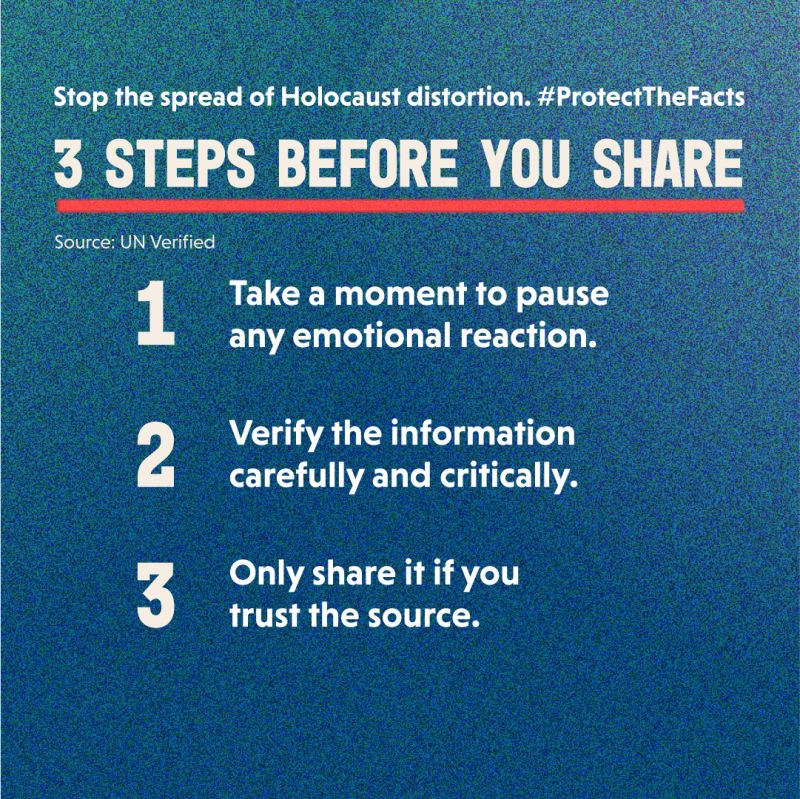
So when you see content about a survivor, a victim, or a situation, think critically before you share it. The best way to honor their memory is to #ProtectTheFacts.