
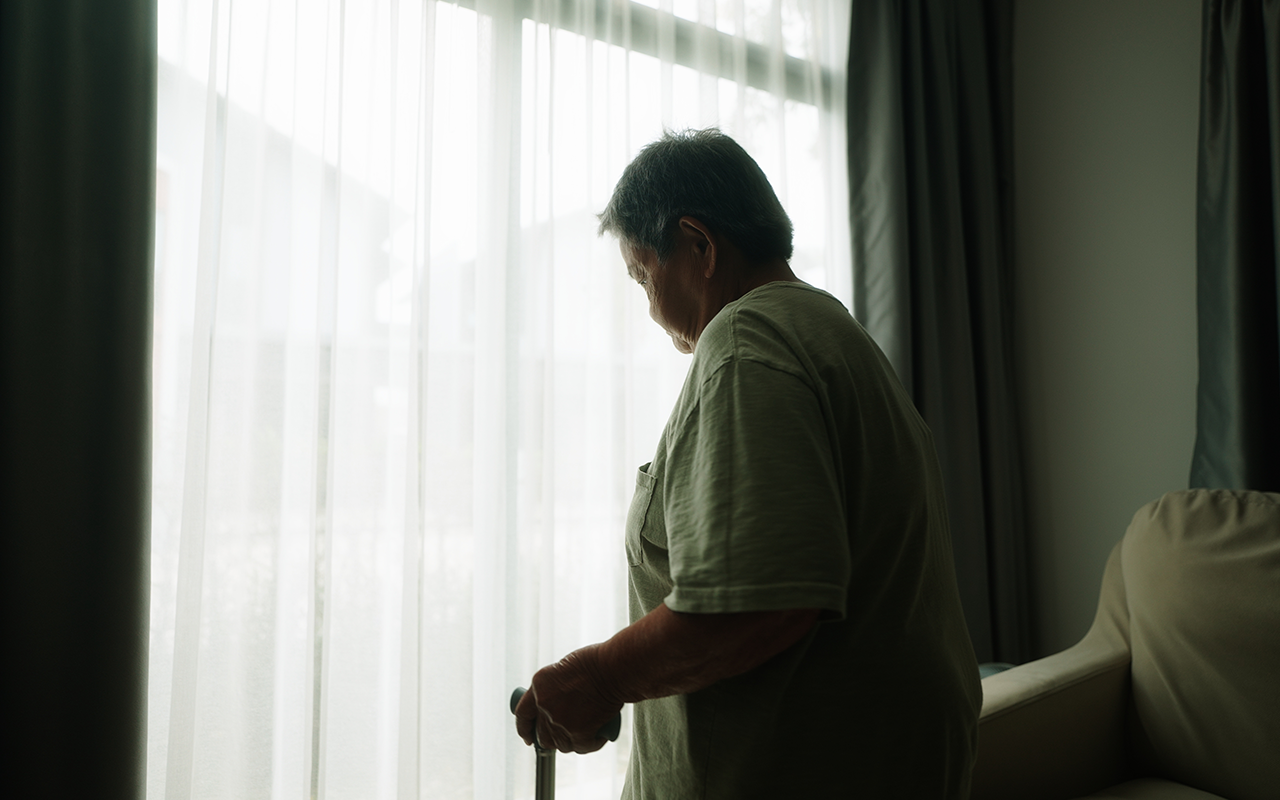
New study findings reveal a 205-day difference in total life span among individuals who were most burdened by social isolation, underscoring the need for interventions that foster social connections.
Social connections are essential to both physical and mental well-being, yet social isolation remains a silent and neglected issue as it continues to grow among populations worldwide. A new study led by a School of Public Health researcher explored the effects of social isolation on mortality risk among older adults in Japan and found that isolation was linked to earlier deaths among individuals who were in their late 70s or older, men, and had nine or fewer years of formal education.
Published in The Lancet Regional Health, the study found that this association was even stronger among people who had lower education but higher income, particularly women. The results also indicate that eliminating social isolation among populations could decrease education and income-related health disparities in total survival time by as many as 37 days, on average.
The study is the first to examine how social isolation and mortality risk differ among certain groups based on age, education, and gender, and it is also the first study to examine these differences inductively through machine learning methods.
“Our simulation in this study suggests that population-level interventions that address social isolation may not only improve population health on average, but also have the potential to narrow existing disparities based on socioeconomic status in one’s life span,” says study lead and corresponding author Koichiro Shiba, assistant professor of epidemiology.
About 1 in 4 older adults across the globe experience social isolation, which can increase one’s risk for developing cardiovascular disease, diabetes, poor mental health, and other issues. Social isolation is distinct from loneliness in that it refers to the lack of relationships, social support, and direct interaction with people, while loneliness reflects the emotional outcomes of isolation.
For the study, Shiba and colleagues from Kyoto University and Chiba University in Japan utilized demographic and health data among a cohort study of 20,000 older adults in Japan between 2010 and 2013, following up for nine years through 2022. Through novel machine-learning modeling, the team found that individuals who experienced social isolation had a shorter survival time than individuals with social ties by nearly 70 days, on average, while the effect of social isolation varied across individuals and could be as many as 205 days.
The most affected groups also tended to be retired or never employed, experienced previous social isolation, and had lower functional independence, self-reported health, and depressive symptoms. Nearly 60 percent of excess deaths related to social isolation were also among people with limited education.
The finding that social isolation had a greater adverse impact among older adults who had less education, but higher incomes, is also supported by Shiba’s previous research that linked disaster-related home loss to functional impairment. Although higher income is generally a health-protective factor, the two discordant factors may actually magnify the effects of social isolation, such as increased stress and frustration.
“My speculation is that this unique group of people lacked protective resources to buffer the negative impacts of social isolation or had more undesirable coping strategies for stress, such as drinking and smoking,” Shiba says. “Alternatively, the type and magnitude of social isolation, such as living alone versus living with someone but having no contact with friends or other social participation, may have been different between these individuals and other social groups, leading to more harmful outcomes.” But these differences were not distinguishable in the analysis, he adds.
In addition to identifying groups that may bear the most harmful effects of social isolation, the researchers hope this study also informs policies and interventions that can remove barriers to social connections and help reduce persistent health disparities among disadvantaged populations. Future research should examine a range of interventions to determine how they can be tailored to be most effective.
Community gathering places, which act as “third places” beyond home and work, could serve an important role in these interventions, says Shiba.
“Community-based interventions that utilize public spaces as local social hubs have potential to mitigate social isolation,” he says. In a previous study, he found that these types of gatherings were associated with improved social connectedness, such as more frequent social participation and volunteering, among older adults in Japan over time. “Such interventions need to ensure that social hubs are accessible regardless of social class, and remove barriers to social connections among individuals from socially disadvantaged backgrounds.”