The repatriation coincided with the lavish opening of the Grand Egyptian Museum, which is finally welcoming visitors after years of delays
Ella Feldman – Daily CorrespondentNovember 10, 2025 11:30 a.m.
:focal(415x277:416x278)/https://tf-cmsv2-smithsonianmag-media.s3.amazonaws.com/filer_public/cf/5e/cf5e3588-b63e-4b9a-a8c0-9c97fd9df96d/egyptische-stenen-sculptuur-1920x1280.png)
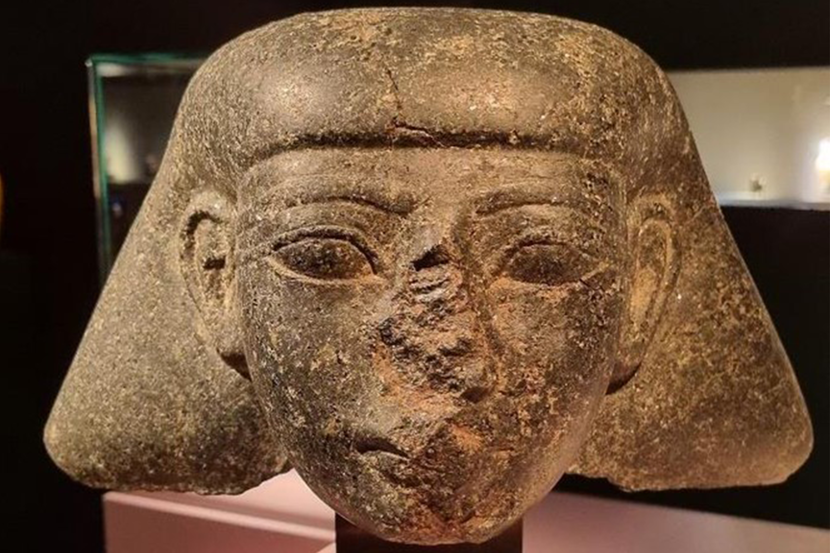
The Netherlands has announced that it will return a 3,500-year-old stone head to Egypt. The artifact dates to the time of the pharaoh Thutmose III, who ruled during the 15th century B.C.E.
Ouija Board: The Mysterious Origins of a Cultural Obsession
Officials think the item was stolen from Egypt during the Arab Spring around 2011 or 2012 and illegally trafficked to the Netherlands. The stone head was found at an art fair in the city of Maastricht in 2022, and the art dealer who was trying to sell the sculpture voluntarily relinquished it.
Measuring 7.5 inches tall, the artifact is made from rock granodiorite, according to the New York Times’ Jenny Gross. Based on the style of the head’s features, experts determined it dates to between 1479 and 1425 B.C.E.
Quick fact: Who was Thutmose III?
The pharaoh is known as a skilled military leader who expanded his kingdom through conquest.
In a statement, Dutch officials say that the ancient artifact is significant to Egyptian identity, adding that the Netherlands is committed to returning cultural heritage objects to their original owners.
The Egyptian bust, which likely depicts a high-ranking official, will be returned to Egypt’s ambassador to the Netherlands by the end of the year. Egypt has yet to announce its plans for the artifact.
The announcement overlapped with the opening of the long-awaited Grand Egyptian Museum, a vast complex that sits near the pyramids and the Great Sphinx of Giza. The museum was first proposed in 1992, but it’s since faced a long string of delays.
Around 57,000 artifacts are on display at the museum—including Tutankhamun’s treasures. The $1 billion facility is expected to provide a major tourism boost, and “the entire country has been drawn into the museum opening hype,” writes the Times.
The museum’s debut “is a great day for Egypt and for humanity,” Nevine El-Aref, media advisor to Egypt’s Minister of Tourism and Antiquities, tells CBS News’ Ahmed Shawkat. “This is Egypt’s gift to the world. It’s a dream come true, after all these years.”
The museum features 258,000 square feet of permanent exhibition space, which is roughly the size of four football fields, according to ABC News’ Ayat Al-Tawy. That makes it one of the largest museums in the world.
Dick Schoof, the Netherlands’ prime minister, announced the repatriation shortly after the grand opening of the museum, a lavish affair featuring fireworks, a live orchestra, and dancers dressed in “ornate pharaonic costumes,” per ABC News.
Schoof tells the Dutch public broadcaster NOS that the repatriation decision was a good-faith gesture, and that the Netherlands will not receive anything in return. The prime minister adds that Egyptian President Abdel Fattah el-Sisi was pleased with the decision.
Christopher A. Marinello, the founder of Art Recovery International, tells the Times that many artifacts were looted during the Arab Spring, and their value is “incalculable.” The stone head arrived at the respected art fair because of its cultural significance, he adds. “Things don’t show up at Maastricht unless they are museum quality.”