Land degradation is not just an environmental problem. Land degradation increases risks to human health and the spread of new diseases. It drives forced migration and enflames conflicts over scarce resources. It is a leading contributor to climate change, biodiversity loss, poverty, and food insecurity. In other words, land degradation is a core challenge of sustainable development.
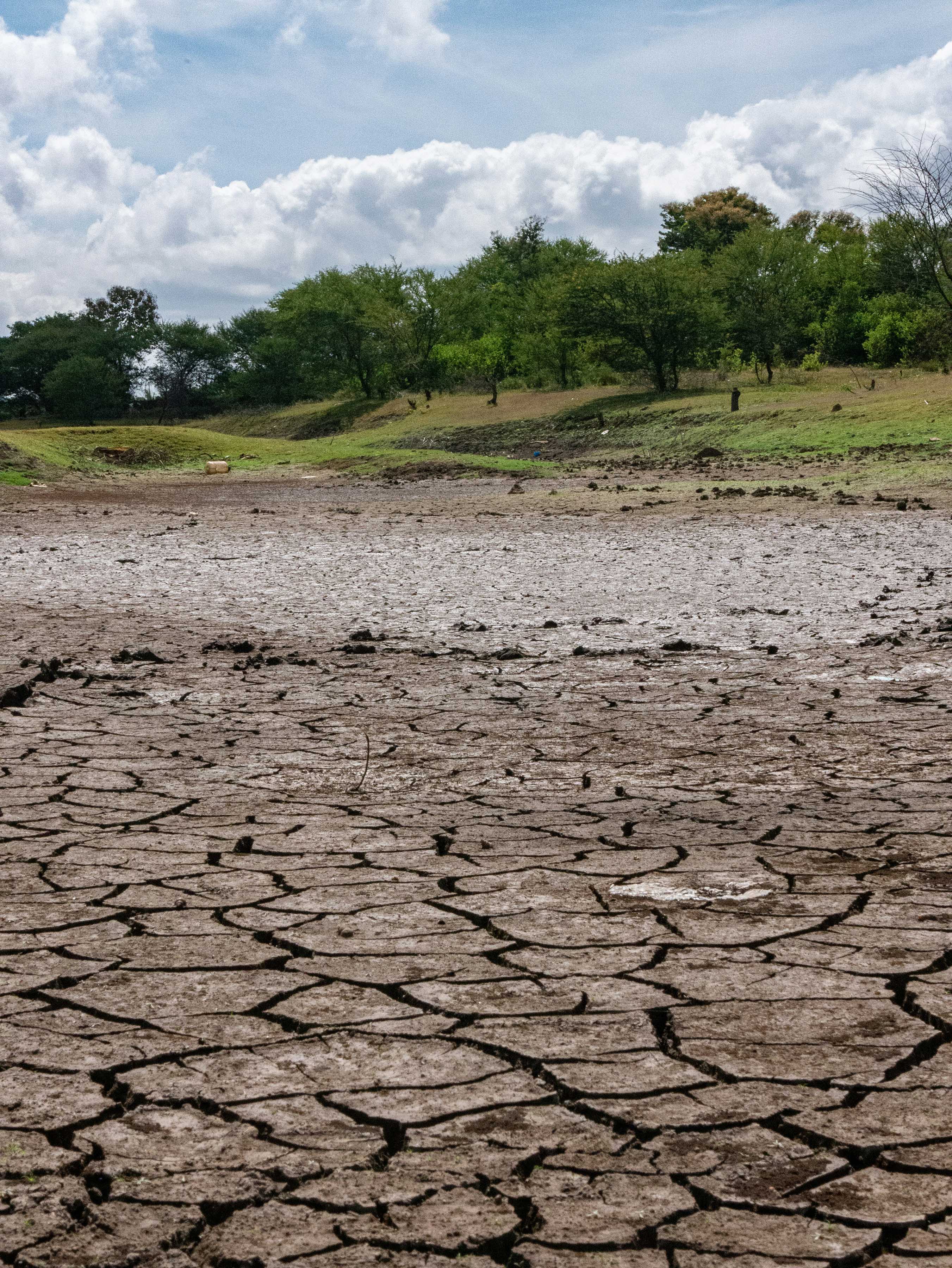
Aridity is considered the world’s largest single driver behind the degradation of agricultural systems, affecting 40% of the Earth’s arable lands—and the overall trend is heading in the wrong direction. Between 2015 and 2019, at least 100 million hectares of healthy and productive land were degraded every year—a cumulative area twice the size of Greenland. Compared to a few short decades ago, droughts hit more often and harder all over the world, driven or amplified by both climate change and poor land management. Land degradation costs the global economy close to USD 900 billion annually, while drought generates at least USD 300 billion in losses each year.
Restoring degraded land and soil, and investing in drought resilience, are some of the most cost-effective actions countries can take to reduce the high human, social, and economic impacts of drought—simultaneously increasing food, water, and energy security while reducing displacement and conflict drivers. Thirty-two years ago, with the adoption of the United Nations Convention to Combat Desertification (UNCCD), countries agreed to walk down this path together.
What Drives Land Degradation and Desertification?
Land degradation is the long-term decline in the quality of land that leads to the reduction or loss of the biological or economic productivity of land. Degradation looks different depending on the starting point of the land. Large scale misuse of rich, biodiverse soil could shift a region from “grasslands” or “croplands” status to drylands. In the drylands, land degradation is known as desertification. According to the Global Land Outlook, drylands cover more than 45% of the Earth’s land surface. Despite their aridity, drylands provide 44% of the world’s agricultural output, support 50% of the world’s livestock, and are home to one in three people worldwide. Experts estimate that, if not reversed, the degradation of drylands to deserts will drive 700 million people out of their homes by 2050 because they will no longer be able to feed themselves or have access to sufficient water.
The dominant drivers of land degradation include agriculture and related land-use changes, unsustainable management or over-exploitation of resources, natural vegetation clearance, nutrient depletion, overgrazing, inappropriate irrigation, excessive use of agrochemicals, urban sprawl, pollution, mining and quarrying, among others. These factors are further intensified by climate change, which exacerbates the rate of degradation through increasing floods, droughts, and sea level rise.
Deforestation is one of the most significant causes of land degradation. Tree roots help bind soil particles, maintaining their cohesion and quality. When trees are cut down, the soil particles tend to disperse, negatively impacting the quality of the soil.
Another driver of land degradation is a lack of land tenure security. When people own their land, they are more likely to make the long-term investments needed to sustainably manage land, such as practicing crop diversity and agroforestry. Even though land constitutes the main asset from which the rural poor derive their livelihoods, millions of farmers—especially women—do not own their land. In many countries, the laws or customs hinder women’s ownership of land. In more than 100 countries, women are dispossessed from their land when they lose their husbands. This is a key issue to global land restoration since women are more likely to invest in diverse food systems, which boost soil health, while men focus primarily on cash crops and monoculture.

What is the UN Convention to Combat Desertification?
In 1991, African environment ministers decided to prioritize their proposal for the negotiation of a new convention to combat desertification as one of the concrete recommendations to be adopted at the UN Conference on Environment and Development (UNCED or Earth Summit) to be held in Rio de Janeiro, Brazil in June 1992. They hoped a convention would help them gain access to additional funding to combat desertification, land degradation, and drought.
Leading into the final days In Rio, delegates had reached agreement on much of the desertification chapter of Agenda 21, the UNCED outcome. This included the definition of desertification: “Land degradation in arid, semi-arid and dry sub-humid areas resulting from various factors, including climate variations and human activities.” However, there was still opposition to a convention. Many developing countries resisted the idea of a special convention for Africa, since they also faced land degradation. Industrialized countries maintained that desertification was a local problem and did not warrant a treaty. It wasn’t until the final hours of the Earth Summit that a deal was finally struck and the call for a convention was included in Chapter 12 of Agenda 21.
Negotiations on the Convention began in May 1993 and were completed in five session over fifteen months. At the first session in Nairobi, Kenya, the International Negotiating Committee held a one-week seminar to inform negotiators of the substantive issues related to desertification and drought, demonstrating that land degradation affected people around the world. This led to a serious discussion on how to create a global convention that still gave priority to Africa. When Committee Chair Bo Kjellén (Sweden) suggested including a special annex for Africa under the Convention, other regions insisted on annexes for their regions.
At the second meeting in Geneva, Switzerland, in September 1993, governments agreed to negotiate four annexes simultaneously, while giving special attention to Africa. In the end, the Convention includes regional implementation annexes for Africa, Latin America and the Caribbean, Asia, and the Northern Mediterranean. A fifth annex, for Central and Eastern Europe, was adopted in 2000.
Differences over financial resources nearly caused the negotiations to collapse. Developing countries called for a special fund as the centerpiece of the new convention. Industrialized countries rejected binding obligations to increase financial assistance to affected countries, insisting that existing resources could be used more effectively. The deadlock was broken only after the United States proposed establishing a “Global Mechanism” to improve monitoring and assessment of existing aid flows and increase donor coordination.
Many developing countries were not happy, but believed they had to accept the Global Mechanism on the final night because if there was no agreement on finance, there would be no convention. On 17 June 1994, delegates adopted the UNCCD, four regional implementation annexes, and a resolution calling for urgent action for Africa.
The Convention recognizes the physical, biological, and socioeconomic aspects of desertification and the importance of redirecting technology transfer so that it is demand-driven. The core of the Convention is the development of national, subregional and regional action programmes by national governments in cooperation with donors, local populations, and non-governmental organizations (NGOs). In fact, the Convention was the first multilateral environmental agreement to call for the effective participation of local populations and organizations in the preparation of national action programmes. This innovation led the first “sustainable development” convention to also be referred to as a “bottom-up” convention.
The UNCCD was opened for signature in October 1994 and entered into force on 26 December 1996. Today, there are 197 Parties, representing universal ratification.
Land Degradation Neutrality
In 2008, a group of scientists was asked by the UNCCD Executive Secretary to examine if the Convention could use the offsetting principle already practiced by the Convention on Biological Diversity (CBD) and the UN Framework Convention on Climate Change (UNFCCC), and apply it to deforestation at one site by planting trees elsewhere. The idea was to use this offsetting principle to lead to zero-net land degradation and expand the reach of the Convention to land degradation globally, not just in the drylands.
The UNCCD pushed forward with this concept of land degradation neutrality (LDN) on a variety of fronts. In 2013, the 11th meeting of the Conference of the Parties (COP11) established a working group to develop a science-based definition of LDN (Decision 8/COP.11). In late 2014, the Secretariat set up LDN pilot projects, through which 14 affected countries worked to translate LDN into national targets.
Meanwhile, the UNCCD and its supporters successfully lobbied to include a target on LDN in the new sustainable development framework UN Member States were negotiating after the expiration of the Millennium Development Goals. When the 17 Sustainable Development Goals (SDGs) and 169 targets were adopted by the UN General Assembly in September 2015, they included target 15.3: “By 2030, combat desertification, restore degraded land and soil, including land affected by desertification, drought and floods, and strive to achieve a land degradation-neutral world.” For the first time, the UNCCD had successfully placed an item at the forefront of the international agenda.
The following month, UNCCD COP12 convened in Ankara, Türkiye, and endorsed the science-based definition of LDN submitted by the working group:
“Land degradation neutrality is a state whereby the amount and quality of land resources necessary to support ecosystem functions and services and enhance food security remain stable or increase within specified temporary and spatial scales and ecosystems” (decision 3/COP.12).
In what some viewed as a ‘game changing’ accomplishment, COP12 agreed that striving to achieve SDG target 15.3 is a “strong vehicle for driving implementation of the UNCCD,” and invited countries to set voluntary targets to achieve LDN. The Global Mechanism and the UNCCD Secretariat established the LDN Target Setting Programme to assist countries in setting national baselines and creating voluntary national LDN targets and associated measures. Since then, 131 countries committed to setting LDN targets and more than 100 have already set their targets.
In 2017, the Convention’s Science-Policy Interface (SPI) published the Scientific Conceptual Framework for Land Degradation Neutrality, which provides a scientific foundation for understanding, implementing, and monitoring LDN. It was designed as a bridge between the vision and the practical implementation of LDN by defining LDN in operational terms. The SPI developed three indicators, which created a clear pathway for monitoring LDN—both for the Convention and SDG 15.3:
- trends in land cover;
- trends in land productivity or functioning of the land; and
- trends in carbon stocks above and below ground.
Countries have pledged to restore 1 billion hectares of land by 2030, but funding shortfalls may prevent these pledges from becoming a reality.
2018-2030 Strategic Framework
In 2017, COP13 in Ordos, China, adopted the UNCCD 2018−2030 Strategic Framework, which has three main components: a vision, strategic objectives and an implementation framework.
The vision commits parties to “A future that avoids, minimizes, and reverses desertification/land degradation and mitigates the effects of drought in affected areas at all levels and strive to achieve a land degradation neutral world consistent with the 2030 Agenda for Sustainable Development, within the scope of the Convention.”
The Framework’s five strategic objectives are designed to guide the actions of all UNCCD stakeholders and parties until 2030:
- To improve the condition of affected ecosystems, combat desertification/land degradation, promote sustainable land management and contribute to land degradation neutrality
- To improve the living conditions of affected populations
- To mitigate, adapt to, and manage the effects of drought in order to enhance resilience of vulnerable populations and ecosystems
- To generate global environmental benefits through effective implementation of the UNCCD
- To mobilize substantial and additional financial and nonfinancial resources to support the implementation of the Convention by building effective partnerships at global and national level
In Abidjan, Côte d’Ivoire, in 2022, COP15 launched a midterm evaluation of the Strategic Plan. COP16 in Riyadh, Saudi Arabia, in 2024, established the Intergovernmental Working Group on the Future Strategic Framework of the Convention to identify key elements, which could include goals and targets, for a post-2030 strategic framework. This report will be reviewed at COP17.
What’s Next?
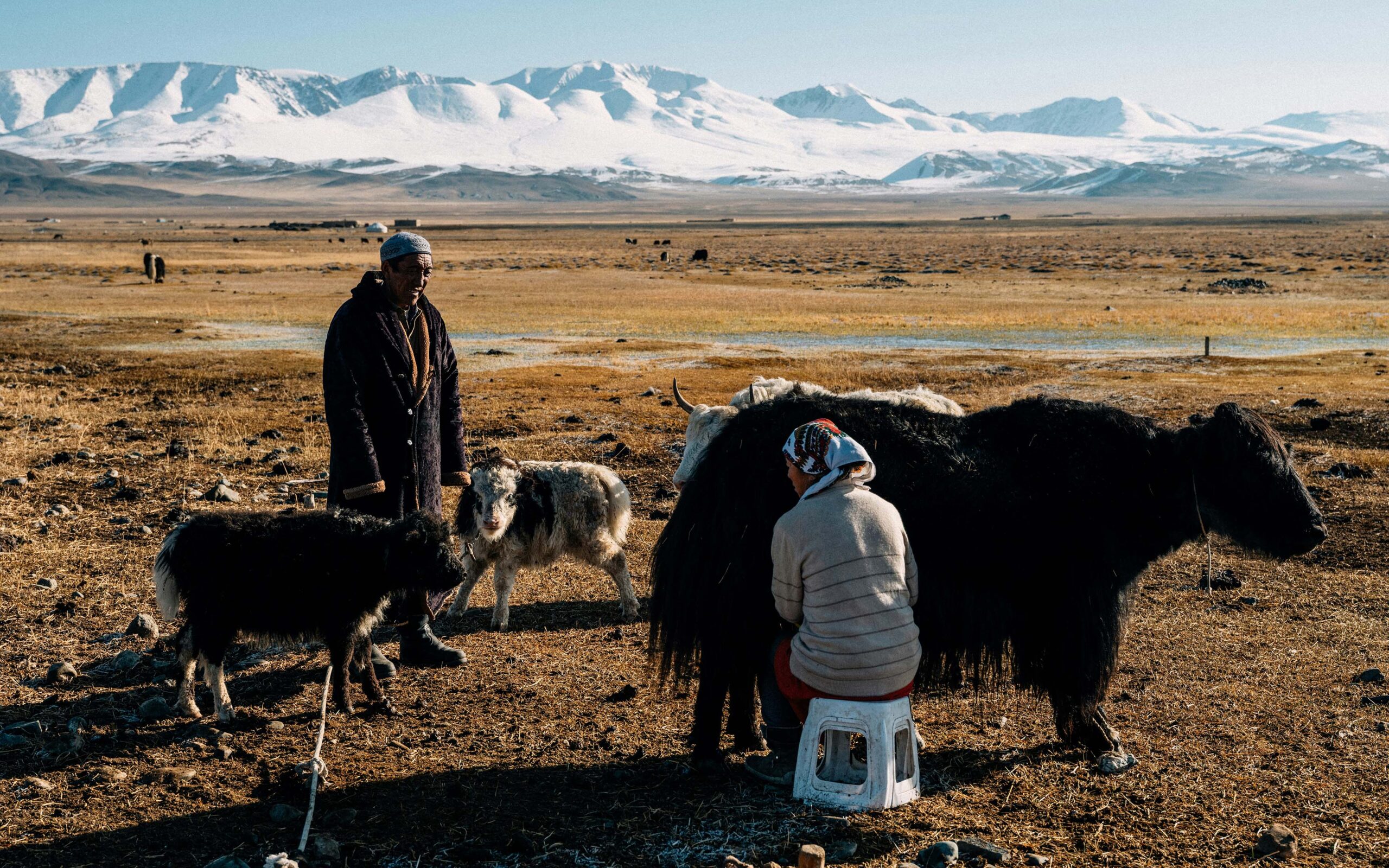
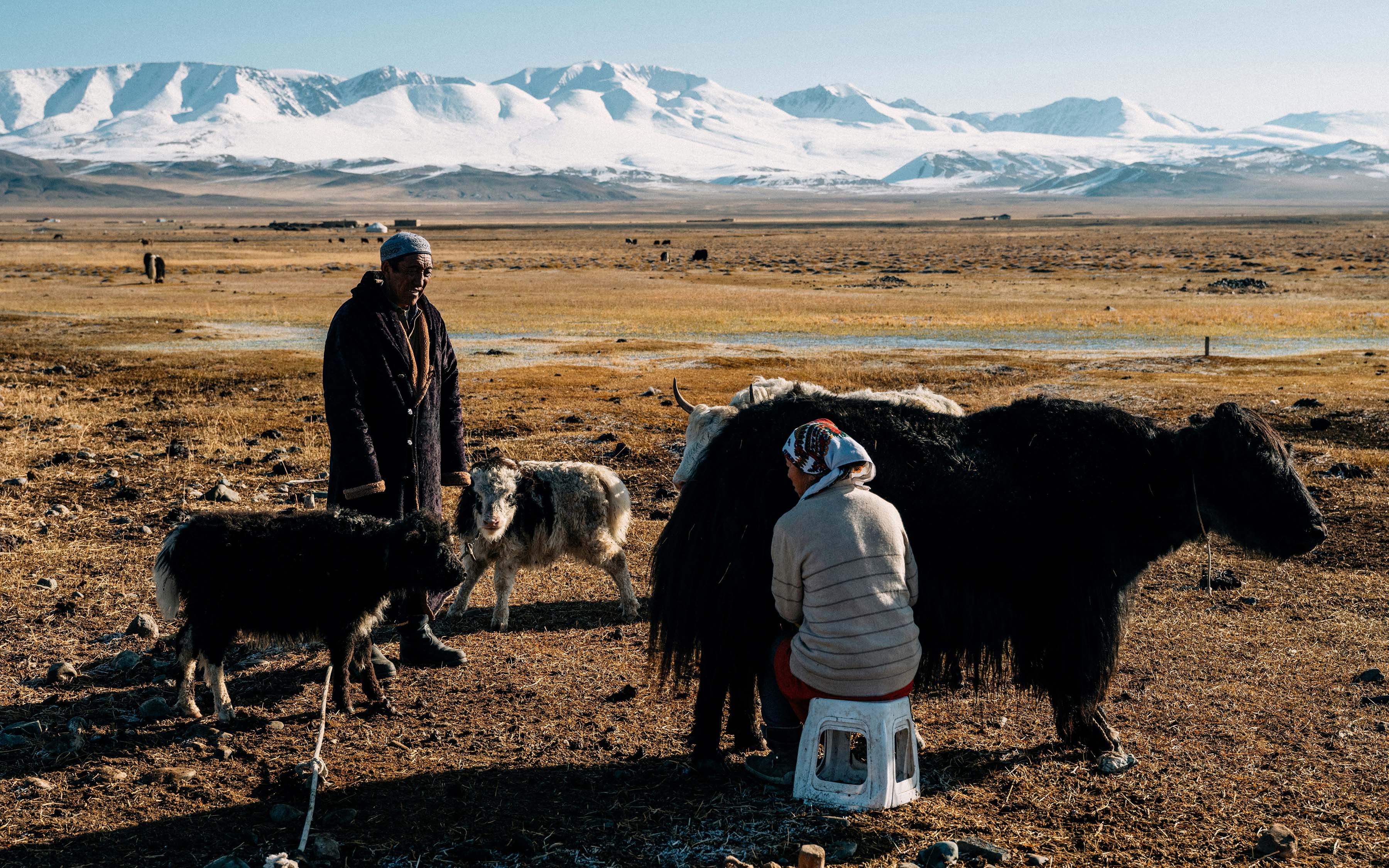
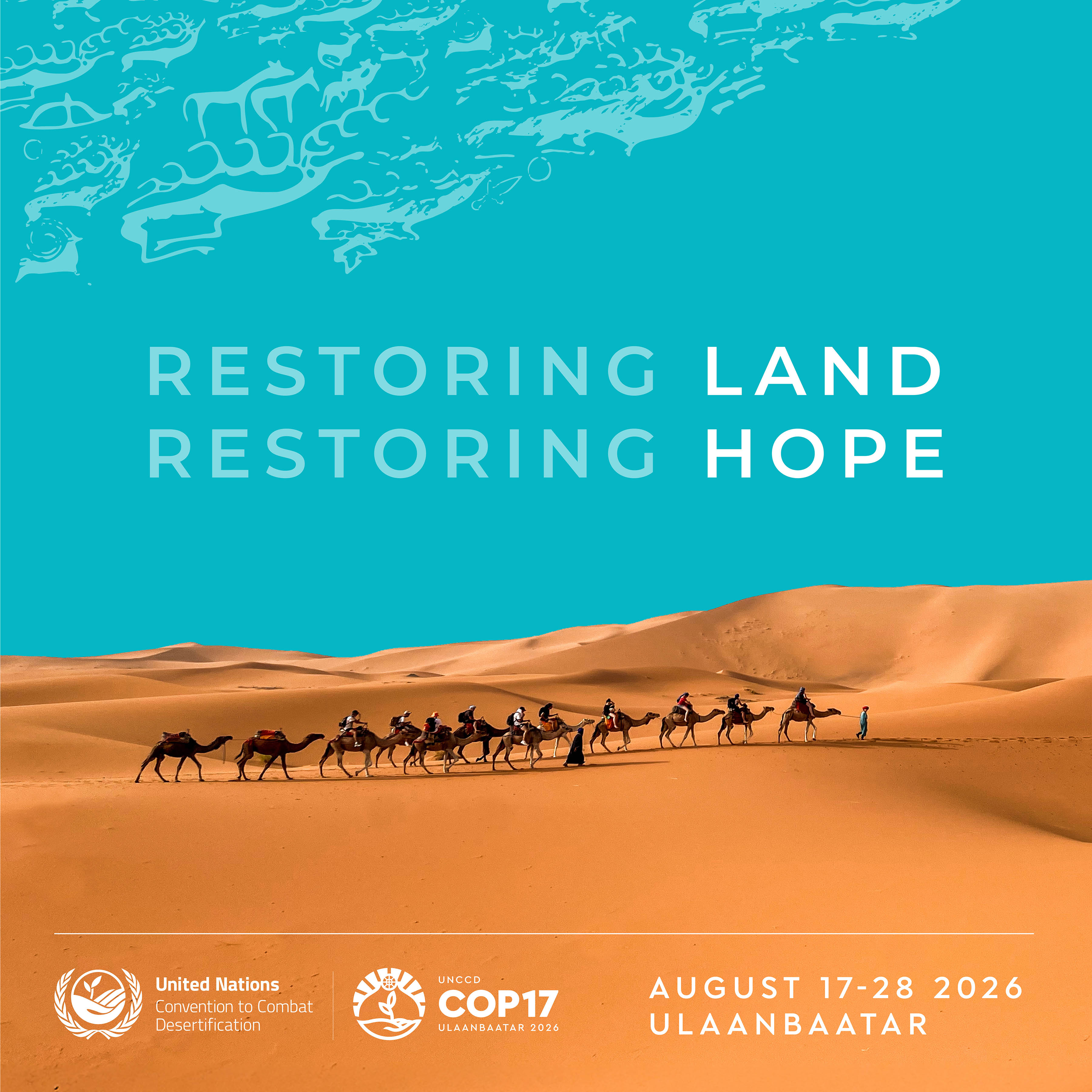
UNCCD COP17 convenes in Ulaanbaatar, Mongolia, from 17-28 August 2026, under the theme “Restoring Land. Restoring Hope.” COP17 is taking place during the United Nations International Year of Rangelands and Pastoralists. This presents a major opportunity to accelerate action on the sustainable management, restoration, and conservation of rangelands, while spotlighting the needs of pastoralist communities who depend directly on these ecosystems for their livelihoods.
Rangelands cover more than half of the Earth’s land surface, support the direct livelihoods of around 500 million people, and provide one-sixth of the world’s nutrition needs. Yet they remain among the planet’s most overlooked and increasingly degraded ecosystems. In addition to formal negotiations, COP17 is expected to catalyze collective action on rangelands, climate change resilience and water security, as well as food systems and soil health.
In addition to the focus on rangelands and pastoralists—and making additional progress on the post-2030 strategic framework—COP17 will consider:
- Science-based guidance for avoiding, reducing, and reversing the degradation of agricultural lands and soils.
- Continuation of the consideration of the global drought agenda: UNCCD Parties agree on the measures needed for addressing drought under the Convention, including strengthening early warning, assessing drought vulnerability and impact, and mitigating drought risk. COP17 is expected to translate this into a decision for global cooperation on drought.
- Participation of the private sector: COP17 will consider ways and means for encouraging and engaging the private sector in addressing desertification, land degradation and drought, including tools for mitigating risks for private investments.
- Participation of civil society: There has been a major increase in the involvement of various stakeholders in the UNCCD process. At COP 17, Parties will consider actions to facilitate the active engagement of civil society organizations, youth, Indigenous Peoples, local communities, and other stakeholder groups.
- Science-Policy Interface (SPI): The CST will consider the procedures and modalities for the future SPI and the arrangements for its technical support, building on the COP16 decision to build the SPI work around four-year work programmes that would generate major science-policy flagship reports.
- Next steps in UNCCD policy frameworks concerning gender equality, land tenure, migration and security, and sand and dust storms.
- Synergies and relationships with other relevant conventions and international organizations, institutions, and agencies. As the first of the three Rio Convention COPs meeting in 2026 (Convention on Biological Diversity in October and UN Framework Convention on Climate Change in November), the UNCCD has the opportunity to set the trajectory for cooperation.
After the success of the Action Agenda in Riyadh, COP17 will continue to facilitate the engagement of non-state actors in the UNCCD process with the aim of accelerating action on the ground by scaling up cooperation, collaboration, innovations, and investments. While the Action Agenda takes place throughout the two-week COP, its four thematic days during the second week provide the context of the high-level segment: Finance, Water, Land and People, and Food Systems and Soil Health.
The COP programme will also include high-level and special events designed to generate political momentum, mobilize partnerships, and support practical outcomes. These include:
- High-level Ministerial Event on Security and Migration
- High-level Sand and Dust Storms Event
- High-level Event on Rangelands and Pastoralists
- High-Level Dialogue on Food Systems and Soil Health
- Youth Forum
- Gender Caucus
- Indigenous Peoples’ Caucus
- Local Communities’ Caucus
- Business4Land Forum and Fashion4Land event
As UNCCD Executive Secretary Yasmine Fouad has said “Land is our most vital infrastructure—underpinning food security, water, livelihoods and stability. When land fails, insecurity rises—through lost livelihoods, forced displacement and increased competition over scarce resources. With UNCCD COP17, Mongolia is offering the world a powerful message: Restoring Land, Restoring Hope is not only an environmental agenda, but a development and resilience priority.”