This nonprofit is reshaping how we support veterans with a radical premise.
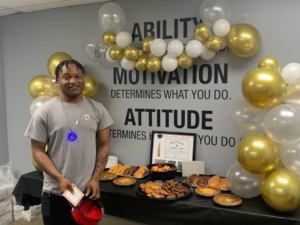
When Chris Sowell first walked into Warrior Wellness, he wasn’t looking for transformation. He was there to fulfill community service hours as a result of an arrest. He was also carrying years of trauma from his military service, plus skepticism around whether he could actually heal (and despair that he might not).
He had cycled through the Department of Veterans Affairs system, tried multiple medications, and participated in seven years of talk therapy without finding relief. By his own account, he was “on the way to end [his] life.”
Unfortunately, Sowell’s experience is not unique. A 2018 report estimated that 41% of veterans have a potential need for mental health care, and mental health challenges are the third most-frequently diagnosed category of conditions at the VA.
To his surprise, Sowell felt a deep sense of belonging at Warrior Wellness that sparked the possibility of change. Eventually, Sowell tried the program himself — not for his own sake, but to accompany a struggling infantry buddy. He couldn’t believe what happened.
“In one session, I completely transformed the way that my body responded, the way my mind responded, the emotion that I had around it — it all changed,” Sowell said. “I spent seven years in therapy with one of the best clinicians I’ve ever met. And in two short hours at Warrior Wellness, I was able to heal.”
Sowell credits the organization’s Accelerated Resolution Therapy with his incredible transformation. Warrior Wellness describes ART as “an evidence-based psychotherapy that fosters rapid recovery by reprogramming how the brain stores traumatic memories and imagery.”
Today, Sowell serves as the executive director of the nonprofit, which is redefining what veteran mental health care can look like. The program begins with a radical premise: Every veteran already possesses the capacity to heal — they just need a community that believes in it, too.
A quiet epidemic
Post-traumatic stress disorder, depression, and anxiety are some of the most widely publicized mental health challenges for veterans, but they’re only the tip of the iceberg. Other issues, such as interpersonal violence, suicidal ideation, traumatic brain injury, and substance use, also widely impact veterans and current service members. These challenges can lead individuals down a difficult path, affecting not only themselves but also their families, friends, and communities.
Stigma surrounding mental health can make seeking help difficult for anyone. Add to that the complexity of navigating a bureaucratic government health care system, and many veterans are left without the support needed to fully heal and build lasting mental, emotional, and physical resilience.
A layered approach to healing
Warrior Wellness provides comprehensive support for past and present service members and their families. The nonprofit knits together alternative therapy services, meditation, mindfulness practices, equine therapy, art and music projects, and even visits to an owl sanctuary. Veterans are introduced to these tools in a five-day intensive program called the Accelerated Wellness Program (AWP), then supported with follow-ups for up to a year.
At the heart of Warrior Wellness is ART, along with meditation and yoga. Sowell explained that these practices work together to help participants ground themselves and open up to other experiences such as art, music, and animal-assisted therapies.
“The art, the horses, the owls — are there to reinforce [our foundational therapy] and give people options. Some things will resonate, others won’t,” Sowell said. “But if even one practice opens a door, that’s enough to keep going.”
One size does not fit all
Warrior Wellness is not a one-size-fits-all approach. The programming meets each veteran where they are and empowers them to take the lead in their healing. For the AWP, Warrior Wellness keeps its groups small, with just six participants at a time. This allows for highly personalized attention: Each veteran sees a clinician daily, with sessions that can last as long as needed.
Sowell noted that Warrior Wellness helps veterans and service members heal from all types of trauma. “Some people come here and never address military trauma. We deal a lot with childhood trauma and sexual trauma.”
The results are undeniable: Between September 2024 and October 2025, participants experienced a 65% reduction in PTSD symptomology, a 74% reduction in depression, and a 70% reduction in anxiety.
And the impact is more than just numbers. For one program participant, Joanne Perez, Warrior Wellness was transformational.
“Things I have been struggling with for years — issues no amount of medication, therapy, or hospital stays could touch — are no longer a part of my life,” she said. “For the first time in a long time, my mental health is no longer a daily struggle. I’ve had to get used to what it feels like to smile again.”
John Leidig, a Navy submariner who attended Warrior Wellness earlier this year, said, “The things I worked on in ART therapy are no longer a part of my life.” Veterans can see immediate results.
“Participants often come in on a Monday hopeless and ready to end it, and by Friday, they are ready to live again,” Sowell said.