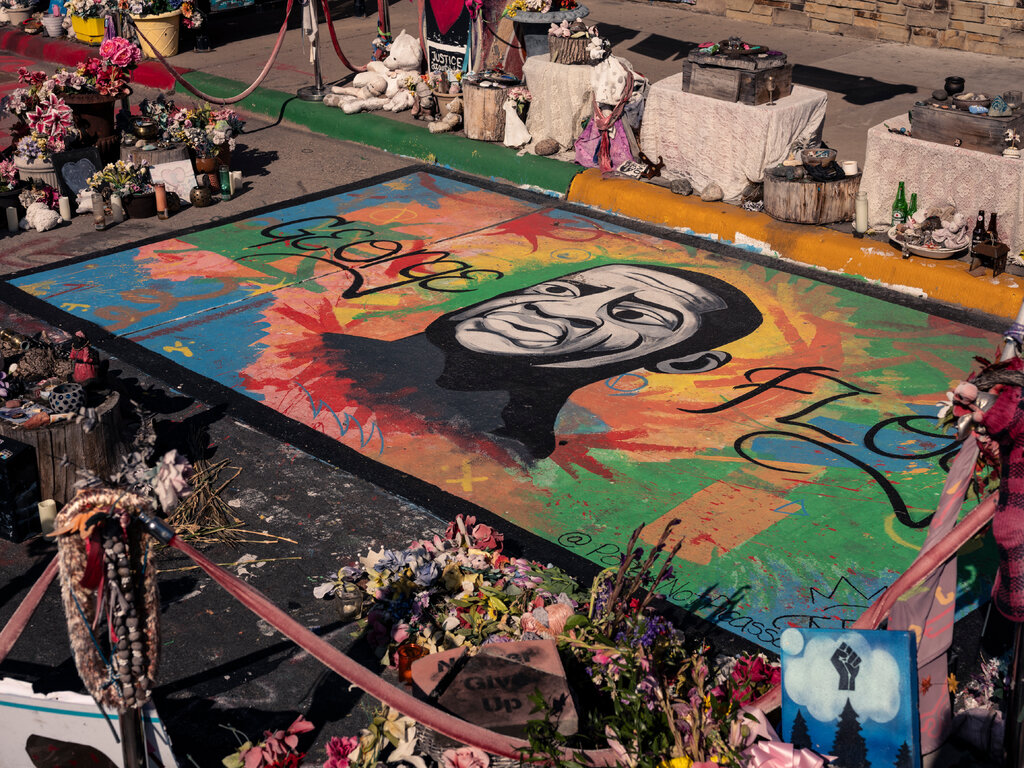
The intersection of 38th Street East and Chicago Avenue in Minneapolis was forever altered the day a police officer knelt on George Floyd’s neck five years ago, killing him.
The killing led to a national reckoning over police misconduct and racism, and here, it spawned a site of protest, art, grief and remembrance that feels to some in this community like an open wound.
Wooden sculptures in the shape of raised brown fists mark either end of the street. Arresting murals nearby have been defaced and touched up repeatedly.
Residents and city officials have debated for years what should be done with the site, and how the man whose killing fueled the Black Lives Matter movement should be memorialized.
The space’s unresolved state in many ways reflects how stuck the country remains on matters of race, justice and reparations.
On this there is little debate: George Floyd Square gave rise to a movement that changed the United States. But what will its legacy and future be?