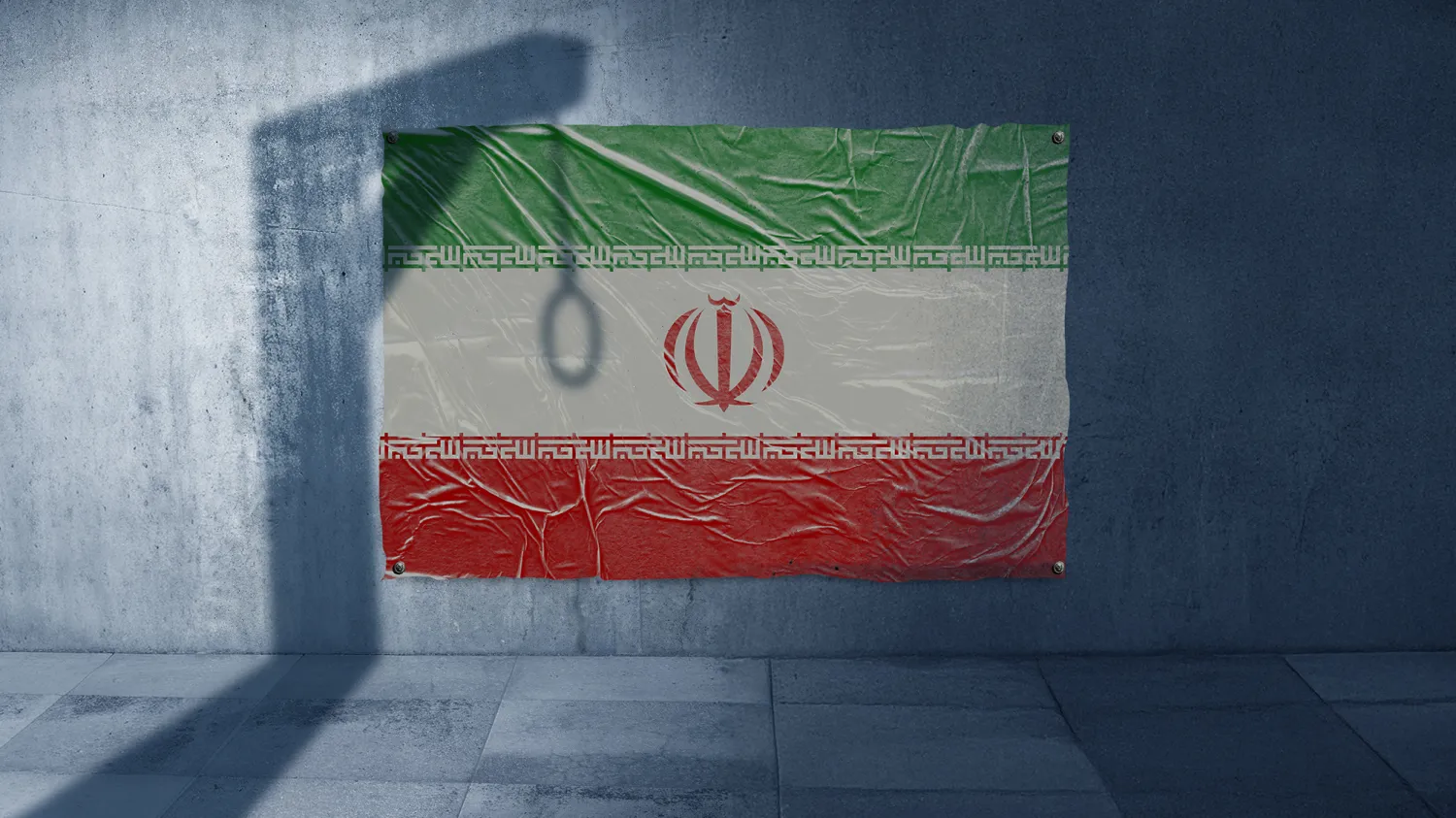
Even seasoned observers are stunned by the regime’s renewed campaign of killing. Families of the condemned are asking why the West doesn’t seem to care
August 06 2025, 11.45am BST
One of her close relatives is among 17 political prisoners now facing imminent execution by the Iranian regime. “Every phone call is a nightmare for me, especially in the morning. It might bring heartbreaking news,” she said from Tehran. “Every night I go to bed with the same dread of what tomorrow may bring.”
Iran has long held the grim distinction of carrying out the most executions per capita in the world. Now it is in the midst of one of the deadliest waves of state killings in decades: analysts say more than 1,025 people were executed in the first nine months of this year, surpassing last year’s total, and 204 in September alone.
The executions have intensified as the regime confronts pressures at home and abroad. Across the country, prisoners are said to be on hunger strike, staging what may be their final protest against the regime. European dignitaries have signed an open letter warning of the fate of the 17 political prisoners facing imminent execution, but the killing spree has otherwise gone largely unnoticed abroad. With the world transfixed by wars and the spectacle of American politics, Tehran appears to have found a rare window in which to kill without consequence.
• Iran needs regime change — I’d die for it, says Shah’s son
The scale and speed of the executions recall the regime’s darkest chapter: the mass executions of 1988, when thousands of political prisoners were put to death in a matter of months. This year marks the most intensive use of capital punishment since then. Among those executed in September were six women, bringing the number of women killed this year to 37.
An execution ceremony in the city of Noor, 2014
ARASH KHAMOOSHI/AFP/GETTY IMAGES
The preferred method of execution for the regime is hanging. For months, the hangings have followed a relentless rhythm. Prisoners are taken from their cells before the morning call to prayer. Blindfolds are placed over their eyes. Some refuse this, and sing or chant slogans in final acts of defiance. Families are summoned to collect the bodies.
Most of the executed are accused of drug offences or murder but human rights groups say charges are often fabricated to conceal political motives. Among the condemned are 17 accused of supporting the banned MEK opposition group, the same charge levelled against the thousands executed in 1988.
Activists say the executions are meant as a warning to anyone tempted to challenge the regime. “The noose has become the regime’s loudspeaker,” said one Iranian living in exile. “Every hanging is a message: we are still in charge.”
The condemned come disproportionately from Iran’s restive minorities — Baluchis, Kurds and Arabs — as well as the generation that led the “Women, Life, Freedom” protests sparked by the death of Mahsa Amini in 2022, who was beaten by the “morality police” for not wearing a veil.
An anti-regime protest in Istanbul, during international outcry at Mahsa Amini’s death in 2022
OZAN KOSE/AFP/GETTY IMAGES
Amir*, a close relative of one current political prisoner, said a court hearing had been scheduled for Sunday to “review” his relative’s case. Such hearings rarely lead to a reprieve; they are often a formality before execution. Prisoners can be led to their deaths within 24 hours.
“Every call from an unknown number makes your heart stop,” Amir said.
Even seasoned observers of Iran’s penal system are stunned by the pace of executions this year. The 1,025 people killed in the first nine months of 2025 compares with 1,001 in all of 2024.
Former inmates describe conditions on death row as “slow-motion torture”. Prisoners are packed into cells so cramped they sleep in shifts. Lights are never fully dimmed, and footsteps in the corridor often mean someone is being led to the gallows.
Despair has begun to ferment into rebellion. At Qezel Hesar, a vast, overcrowded complex known as “the hanging prison” outside Tehran, inmates have chanted from their cells at night. Some have stopped eating or drinking in protest.
Qezel Hesar prison
IRAN HUMAN RIGHTS
Lawyers who try to challenge sentences are silenced or detained, and defence counsel are often denied access to files until the eve of execution. Some relatives learn of the death only when the prison returns a folded plastic bag containing their loved one’s clothes.
Amnesty International has described the wave of hangings as “state-sanctioned murder on an industrial scale”. Yet inside Iran, news filters out only in fragments: grainy photos, coded tweets, whispers from behind prison walls. Phones are cut off, and families who speak to journalists are threatened.
The United Nations has repeatedly called on Tehran to halt the executions, warning that many trials fall far short of international standards. UN experts cite a pattern of coerced confessions, secret hearings and denial of legal representation. Human Rights Watch says the surge in hangings reflects “a government that equates survival with repression”.
Tehran dismisses such criticism as “foreign interference”, insisting its judiciary acts independently and that executions are necessary to uphold “public security and divine justice”.
In reality, the ayatollahs are facing one of the most precarious years of their rule. In the spring, co-ordinated Israeli and American airstrikes tore through Iranian intelligence and nuclear sites, exposing the country’s vulnerabilities. The economy is collapsing under sanctions. Inflation has hollowed out savings; unemployment is rising.
“For decades, Iran’s clerical dictatorship has relied on repression and executions, export of terrorism and war, and pursuit of nuclear weapons for its survival,” said Shahin Gobadi, of the National Council of Resistance of Iran, an opposition group. “Over the past year, as its nuclear programme and network of militant proxies have been severely weakened, the regime has become even more reliant on domestic repression.”
Publicly, the regime appears to have loosened restrictions on women’s dress. Increasing numbers of women now appear without veils in public, especially in Tehran and other major cities, often without immediate consequence. Officials appear to be avoiding a new round of street confrontations they fear they might not be able to control; a tactical retreat rather than an ideological change of heart.
But the same anxiety that has prompted tolerance of unveiled women is driving the ruthless campaign of executions.
Families of the condemned say the indifference of western governments is unbearable. “Tell your governments to stop pretending they don’t see,” said Amir. “The regime is waging war against its own citizens. All they have left is execution. They’ve intensified the killings to inspire fear.”
As for Leila, she often catches herself staring at her phone as it charges on the kitchen table. “Every morning I think: maybe today it will ring,” she said. “Every night I pray it won’t.”
*Names have been changed to protect identities