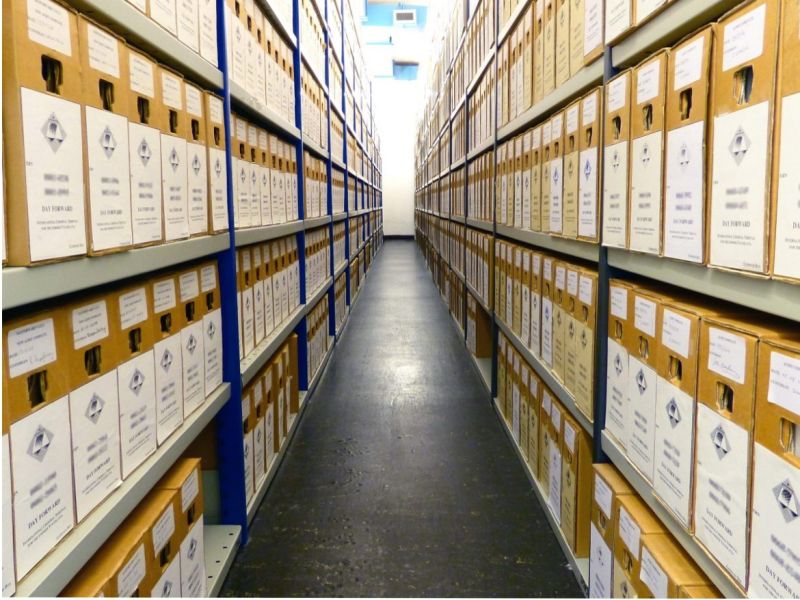
Behind every judgment of an international tribunal lies an archive — silent, patient, precise. Archives do not speak, yet they make justice possible.
As we mark the 30th anniversary of Srebrenica, I reflect on how archives carry the weight of collective memory. At the International Criminal Tribunal for Rwanda and the International Criminal Tribunal for the former Yugoslavia — now maintained by the United Nations International Residual Mechanism for Criminal Tribunals (IRMCT) — courtroom transcripts, photographs, video testimonies, and judicial records are not just documents. They represent the voices of survivors, the final accounts of victims, and the evidence base for accountability.
The same applied at the Khmer Rouge Tribunal, where decades of silence were confronted through testimony and preserved records.
More recently, as part of my work at UNITAD Iraq, I was involved in preserving a vast collection of material on the crimes committed by Da’esh, including millions of pages of documents and over 50 terabytes of digital evidence. These archives are not merely technical collections. They are the record of loss and resilience, the proof that atrocities occurred, and the foundation for future justice — whether in courtrooms, truth commissions, reparation bodies, or legislatures.
The work of building and safeguarding these archives often rests with archivists, analysts, and information specialists who remain largely unseen. Yet without them, voices risk falling into silence, and societies risk forgetting hard-won truths.
In societies emerging from conflict and repression, archives are not a luxury. They are the evidence base for truth-telling, a foundation for reconciliation, and the institutional memory that helps prevent recurrence. Whether preserved on acid-free paper or encrypted drives, they remain vital to remembrance — and to law.
Reflecting on these experiences reinforces a simple idea: memory is not passive. It is an active, shared responsibility that underpins international justice — a responsibility we all share, across professions and generations.