By: Susanna Kelley
On Nov. 24, the Australian Parliament passed a motion formally recognizing the persecution of the Hazara in Afghanistan. The motion specifically:
“(1) acknowledges with deep concern the ongoing persecution and discrimination faced by the Hazara people and other ethnic religious minorities under the Taliban;
(2) calls for the protection of all minorities in Afghanistan, as well as women and girls, noting no part of Afghanistan or Afghan society has been immune from violence or persecution; and
(3) recognises the valuable contributions of Hazara Australians to the cultural, social and civic life of our nation, and acknowledges that these contributions extend well beyond their own community.”
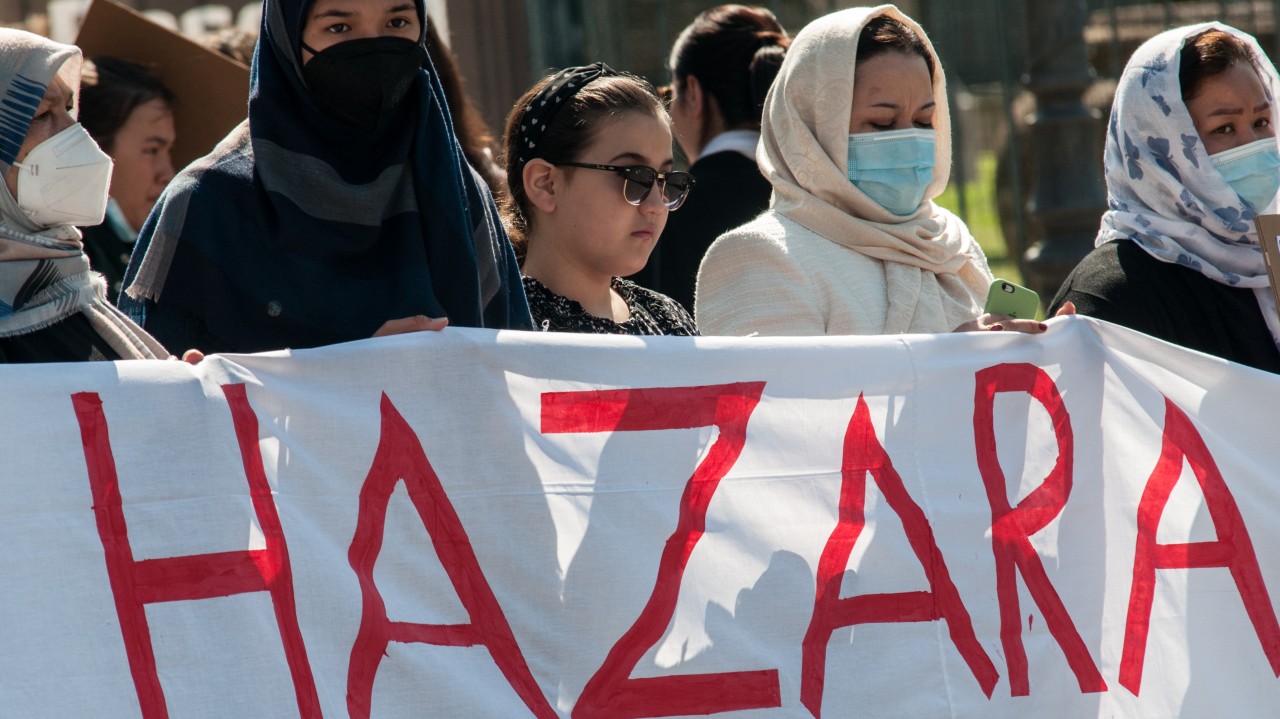
Hazara civil society and diaspora activist groups from across Australia, spearheaded by the Hazara Legal Network, were on hand to witness the passage of this historic motion. For years, Hazara advocates in Australia have pushed for formal recognition, sharing their stories, engaging experts, and bringing documentation and evidence to Parliament, including New Lines’ own report.
The Hazara, an ethnoreligious minority group based primarily in Afghanistan, have endured centuries of persecution under successive regimes. Since the Taliban’s takeover in 2021, conditions in the country have only deteriorated, especially for women and children. Hazara have been excluded from government and systematically purged from the judiciary, military, and security forces. They have been repeatedly targeted at cultural sites, schools, mosques, and women’s centers. New Lines’ September 2025 Hazara Genocide report concluded there is reasonable basis to believe the Taliban’s campaign of mass violence meets the legal definition of genocide under Article II of the Genocide Convention.
In formally recognizing the persecution of the Hazara and other ethnic religious minorities, Australia has committed to deepening its support. MP Libby Coker emphasized continued assistance for Hazara communities and U.N. aid workers operating under Taliban rule, alongside targeted sanctions against Taliban leaders responsible for abuses against minorities, women, and children. MP Sarah Witty stressed that this recognition is not symbolic – it is a promise to safeguard human rights in Australia and abroad.
This recognition marks an essential first step. It also carries practical implications: It allows Hazara asylum seekers to more readily qualify for refugee visas in Australia by formally acknowledging that they face a “well-founded fear of persecution,” a criteria for inclusion in Australia’s refugee and humanitarian program. This status is granted only to asylum seekers based on religion and other identity-based factors. The individual must face a “real chance of persecution” through “serious harm” to the person and “systematic and discriminatory conduct.” This formal designation of the Hazara ethnoreligious minority as a persecuted group fulfills these crucial and hard-to-prove requirements. In doing so, it also grants them protected status, which includes the principle of non-refoulement: the prohibition on returning individuals to a country where their life or freedom would be threatened. Australia likewise holds obligations not to send people back to situations where they would face clear human rights violations. This protection is especially critical for Afghan refugees, including girls and those persecuted for their ethnic or religious identity, who have been tortured, threatened, or killed by the Taliban following forced returns from Iran and Pakistan.
This is a landmark victory for the Hazara community – one that took years of persistent and coordinated advocacy to accomplish. In March 2023, the bipartisan Parliamentary Friendship Group for Hazaras (PFH) was launched in the wake of the attack on the Kaaj education center in the predominately Hazara Dasht-e Barchi district of West Kabul that killed 54 people and injured more than 114, to bridge Hazara advocacy groups with policymakers, highlight ongoing human rights violations, and unify their work. The challenge now falls to the rest of the international community, particularly the European countries that host around 130,000 Hazara, to follow suit. Recognition, protection status, acknowledgment of ongoing and historic persecution, and concrete humanitarian support must follow. Australia has set the standard.
Source: https://www.linkedin.com/pulse/historic-recognition-australian-parliament-formally-ucsac/